
Asia is generally an affordable region to explore, with plenty of value when it comes to choosing a country for your next adventure. The exception to this is Bhutan, which is one of the more costly destinations in the world to experience.
For many travellers, any thoughts of holidaying here are usually brief, with the additional cost enough to put Bhutan into the ‘maybe one day’ basket. Cheaper and more accessible options are plentiful and, understandably, are the first choice for many of us. Places where your holiday budget goes a long way, allowing you to get as much value from your funds as possible.
So, what makes Bhutan so expensive, and is it actually worth it? Let’s take a look at the costs involved in visiting Bhutan before deciding whether the experience justifies the price.
Some links may be affiliate, meaning we earn a small commission at no extra cost to you – this helps us keep sharing honest travel inspiration.
Why Is Bhutan So Expensive?
Bhutan remained largely isolated and inaccessible to the outside world until the 1970s, when the country slowly began to open up to tourism. One of the last places on the planet to introduce television and media, these everyday luxuries only became available in 1999. Bhutan has always been happy to fly under the radar, with little emphasis placed on attracting international visitors or attention. Prior to 2019, Bhutan was a place for only serious adventurers or cashed-up foreigners. Now, with the world becoming more accessible, more people are noticing the small Himalayan Kingdom of Bhutan on the map.
How Much Does It Cost to Visit Bhutan?
What does it actually cost to visit Bhutan? And is it worth all the additional money?
After taking the plunge and visiting Bhutan recently with my wife, we can tell you that a mid-range experience will set you back US$400 a day for a couple.
This is a large sum of money, money that would set you up for days elsewhere.
Half of this money goes to the Bhutanese government as a Sustainable Development Fee (SDF).
In essence, each visitor is charged US$100 per night for the privilege of entering the country. Is it worth it?
The Bhutanese government has had a high-value, low-volume approach to tourism for fifty years, mindful of the dangers of overtourism. Bhutan is a small nation, with limited hotels and tourism infrastructure. It simply can’t handle being inundated with foreigners. So, the government essentially controls the tourism industry. They make it mandatory to use the services of a tour company to enter the country. Visitors were required to pay US$200 per person, per day, with everything such as accommodation, meals, transport, guides, and government fees included in the package. This immediately made Bhutan more of a high-end destination, with travel here simply becoming out of reach for the everyday traveller.
This approach had been in place from the 1970s until recently. With COVID bringing the tourism industry worldwide to a halt, many countries, Bhutan included, needed a new strategy post-pandemic. They decided to reduce the Sustainable Development Fee (SDF) to US$100 per person, per night. Visitors could then book their own tour based more on their budget. As a result of the reduced government SDF, the country has seen an influx of visitors.
But how much are you actually saving?
A mid-range tour costs US$100 per person, per day. Combine the tour cost of US$100 per person, with the government fee of US$100, and you’re back to the old price anyway.
Is it really half the price to visit Bhutan? Or is it simply good marketing?
The compulsory government fee adds up. A five-night visit costs a couple US$1,000 in government fees alone.
The funds generated from these fees supposedly go back into the country, providing education, healthcare, and roads, all worthy causes.
Around seventy percent of visitors to Bhutan are from neighbouring India.
This isn’t because they are all wealthy and can afford the fees. It’s because they only pay a small portion of the fee, US$10 per person. This is questionable. Is it fair that the 30% minority pay ten times the amount of the majority? Probably not. It’s not really a user-pays system. It would be nice if those visitors paying top dollar received preferential treatment at sites and attractions, but that is not the case. You will be jostling with all the other travellers.
Is Bhutan Worth Visiting?
The country undoubtedly has plenty to offer. It is unlike many other places. There is an element of mystery about it. A land of dragons and ancient temples. It is tidy and well maintained. People are generally welcoming and happy.
But is the compulsory Sustainable Development Fee (SDF) value for money? In all honesty, probably not. The fact that only Western visitors pay it doesn’t seem right. When you add the expensive flights required to reach Bhutan, your money quickly disappears.
Yes, there are some spectacular sites and a rich history, together with a unique culture. There are, however, plenty of countries that also have amazing attractions and beautiful people. Countries where your money goes much further.
Did we enjoy our time in Bhutan? Without a doubt.
Is it a place where you’ll find value for money? Absolutely not.
If you do decide to visit, our Bhutan travel guide covers everything from useful things to know to the country’s top attractions
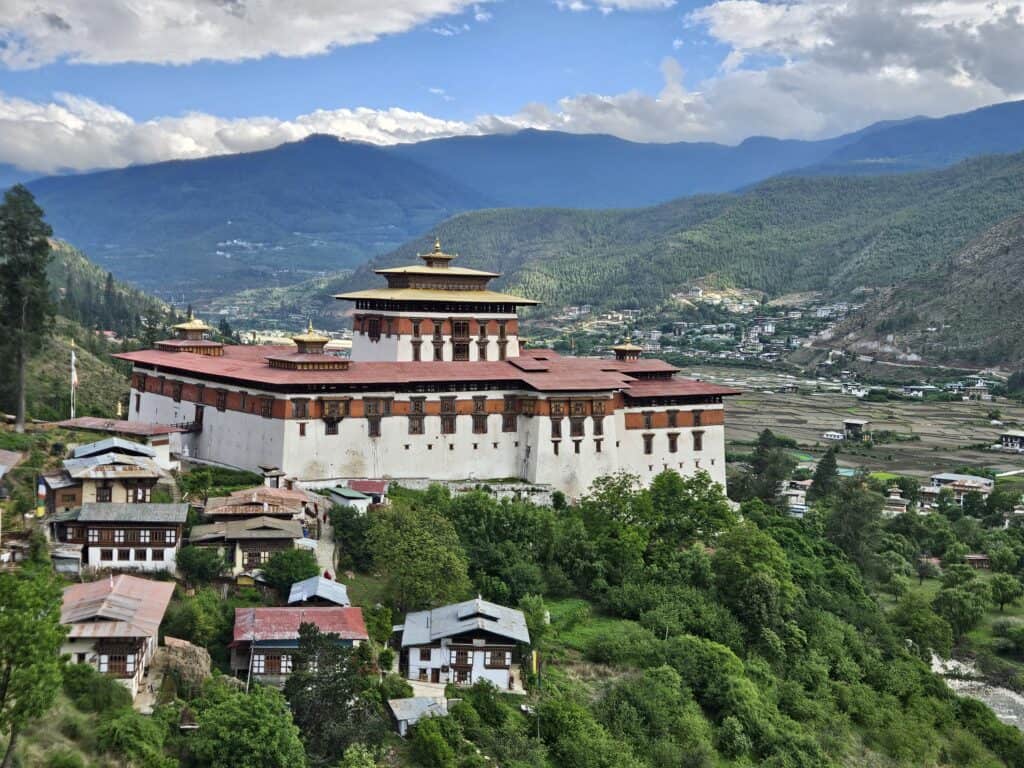
It’s hard to put a value on an experience.
Final thoughts – Is Bhutan Worth It?
After experiencing Bhutan for ourselves, I’d have to say no.
It’s hard to put a value on an experience. Bhutan has. They believe it’s working for them. It would be nice if anyone could come and see what they have to offer. Unfortunately, that’s not the case.
Is the current situation going to change anytime soon? That’s unlikely. It is predicted that the SDF will actually increase in the not-too-distant future. A new airport is currently under construction in the south of the country. This will hopefully make reaching Bhutan a little easier and more affordable, but that remains to be seen.
Travelling and exploring the world is all about special moments. These moments can be completely unexpected. Many of the best moments are ones that no amount of money can buy.