
Looking for a safe, rewarding, and easy to reach African destination? One brimming with wildlife, stunning landscapes, and natural wonders? Seeking an emerging country that welcomes visitors, is affordable, and yet not crowded? This Eswatini travel guide covers everything you need to know, from how to get there to the experiences that make it worth visiting. Our adventure took us through Mbabane and Eswatini’s main attractions, offering a deeper look at what travel here is really like. We share our insights on where to stay, where to eat and drink, and the best things to see and do. Our travel style is independent and immersive, with a focus on practical tips and useful things to know before visiting this obscure destination.
Some links may be affiliate, meaning we earn a small commission at no extra cost to you – this helps us keep sharing honest travel inspiration.
Eswatini, ‘the Switzerland of Africa’. There’s no mistaking how this name came about, as mountains cover around 30% of this tiny kingdom. ‘Land of surprises’ would also describe this country well. Receiving very little in the way of publicity, most people know very little about the kingdom, let alone what this small nation has to offer. Still ruled by a King, it’s a destination that’s truly unique. Eswatini is safe, peaceful, and full of easy going, welcoming people. With national parks home to the ‘Big 5’, scenic rivers, rich cultural experiences, and endless hiking and outdoor activities, Eswatini is a country that punches well above its weight – and is well worth discovering.
Why go to Eswatini?
Eswatini is a dream destination for travellers seeking natural experiences. It’s the place to come for those who love hiking, mountains and stunning scenery. Outdoor activities dominate here. The kingdom is ideal for road trips – a perfect destination for a driving holiday. There’s so much to explore within its small boundaries, yet nothing takes more than a couple of hours’ drive from the capital, Mbabane. Don’t come if you’re looking for designer shops, giant malls, or five-star dining – Eswatini isn’t that type of place, and it doesn’t try to be. It’s an authentic country, with authentic people, offering authentic experiences.
Quick facts for travelling in Eswatini
- Capital: Mbabane and Lobamba
- Best time to visit: May to October (wet season is November to April)
- Budget (mid-range couple): AU$130 per day
- Currency: Swazi Lilangeni (SZL)
- Language: Swati and English
- Visa requirements: No
- Travel difficulty: 1 (1 = basic & 5 = challenging)
Mbabane
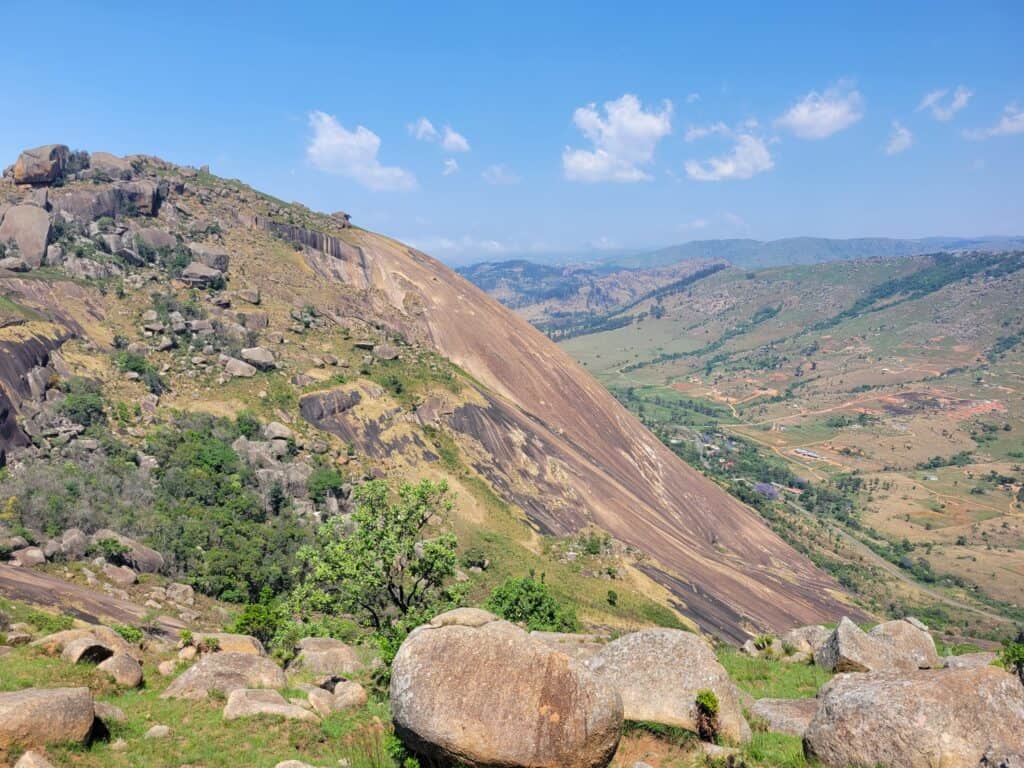
Mbabane may be called a city, but it has more of a town-like feel. There’s no rush hour or gridlocked traffic here. Slowly, slowly is the theme. People say hello, they chat. Ladies sell fruit while buses and taxis patiently wait. Banks, shopping centres, and markets provide everything you need. Mbabane is tidy and, like the country, seems to take pride in itself. Nestled in a valley surrounded by rocky hills, it’s a picturesque little city. Mbabane is an excellent base for exploring the rest of the country — the kind of place where you could easily chill out for a while, or maybe even stay a little longer.
Getting to Mbabane
Mbabane is a thirty-minute drive from Manzini, the location of Eswatini’s International Airport. Taxis and minivans regularly depart from the airport area, heading to the capital. We drove to Mbabane from Johannesburg Airport – a journey that took around four hours. South Africa and Eswatini share eleven border crossings, making it easy to enter the kingdom from several directions.
Where to stay in Mbabane
Mbabane isn’t a very large city – it’s actually quite small. and has more of a country-town feel. The city centre is home to a few of the fancier hotels, mostly catering to visiting dignitaries. Airbnb’s are growing in number and can be found in the valleys and hills surrounding the town – they’re the best choice if you have a car. We stayed in an excellent home on Mbandzeni Street, with great views of the mountains.
Where to eat and drink in Mbabane
Mbabane has plenty of places to eat, with a focus on local cuisine. Chicken and meat dishes are easy to find, while vegetarian options require a little more searching. Supermarkets often have delis and are an excellent place to grab lunch or dinner. OK Foods is the best – it gets very busy during the lunch hour.
- Get to Mantenga Lifestyle and Craft Centre (has a range of eating options, and is popular with expats and visitors)
- Don’t miss eDladleni (serves a range of tasty dishes, at great prices. A nice atmosphere. Don’t miss the turn-off)
- Check out Curry Express (locals love the curries at this place, near the petrol station. A variety of options are available, including vegetarian. Watch out, dishes are spicey!)
It’s an authentic country, with authentic people, offering authentic experiences.
Things to see and do in Mbabane and Eswatini
Sibebe Rock is the world’s second largest rock. It’s hard to miss, and sits towering over the valley below. The spectacular views from the top make the climb worthwhile. Guides wait in the village at the bottom of the hill, just past the resort turn-off. Our guide, Lucky, was great. He explained the history of the rock and also took us to secret caves. Contact him via WhatsApp+26876306736
Mlilwane Wildlife Sanctuary is located down the valley, about thirty minutes from Mbabane. It’s a pleasant park to spend a couple of hours driving around. You can also walk, or cycle inside the park, as there are no predators. The sanctuary offers a range of accommodation options, including camping, and is a great spot for a picnic.
Mantenga Cultural Village is the perfect place to experience Eswatini’s traditions and culture. Two daily dance performances, along with a guided tour of the village, provide an insight into how life used to be. Nearby Mantenga Falls are a great spot for a picnic.
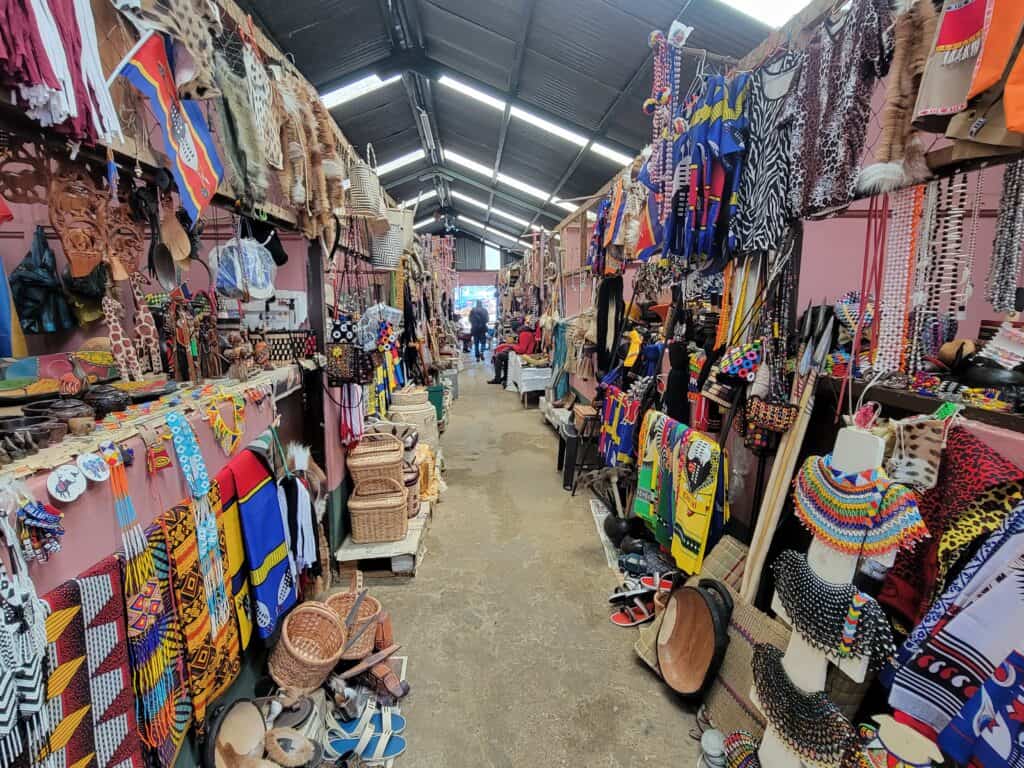
Mantenga Lifestyle and Craft Centre is a good place to grab some souvenirs or gifts. It’s also popular for lunch, with a few restaurants on site.
National Museum has a small collection of animals, artifacts, and displays. It provides insight into Eswatini’s history.
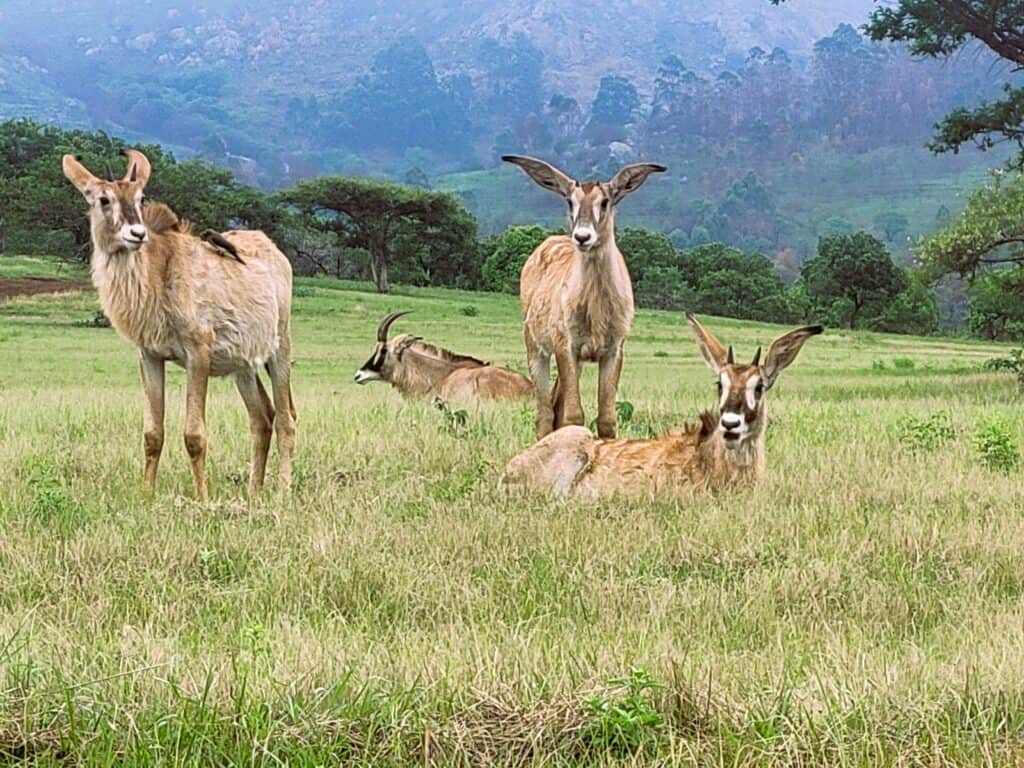
Hlane Royal National Park is home to the Big Five and a variety of other wildlife. The impressive park is less than a two-hour drive from Mbabane. Safaris here offer great value, and you often have the park almost to yourself. There are a number of options if you would like to spend a night or two.
Craft Markets are plentiful and fun to explore. Stopping at one and chatting with the locals is a highlight, and unlike in other countries, there’s no pressure to buy. You don’t get bothered or harassed. Two of our favourites are Mbanbe Craft Market and Ezulwini Handcraft Market.
Getting around Mbabane
Having your own car is a huge advantage when travelling in Eswatini and Mbabane. Mbabane itself is easy to explore on foot, and taxis are readily available if you need a lift. Minibus vans depart from the large Central Bus Park in the town centre, servicing areas outside the city as well as towns and villages across the country. There is also a taxi bay at the bus park.
Getting to Eswatini
Eswatini International Airport is in Manzini, about a thirty-minute drive from Mbabane. Flights operate to and from Johannesburg, Cape Town, Zimbabwe, and Lesotho.
We hired a car after arriving in Johannesburg and drove to Eswatini, which took around four hours. On our way out, we continued to Lesotho — an eight-hour scenic drive. The border crossings were among the easiest we’ve experienced, taking less than fifteen minutes.
Curious about Lesotho? Read our Lesotho travel guide for tips and inspiration
Useful things to know before visiting Country
It’s a tidy and safe country.
www.thekingdomofeswatini.com is an excellent source of official travel information.
If you’re driving, be aware that local driving habits can be unpredictable, with Stop signs and even traffic lights sometimes ignored – always check both directions before moving.
If you hire a car in South Africa, make sure you have the cross-border paperwork from the rental company.
Paying by card is possible in most places.
The Wise Multi-Currency Card works really well and makes managing travel money simple. We use Wise when we travel – get yours here and support our adventures.
The South African Rand is accepted everywhere at the same value as the local currency.
It can also get surprisingly cold, especially in the evenings and higher elevations, so pack a jumper.
Final thoughts on travelling in Eswatini
Eswatini is a down-to-earth, unpretentious place. There are no tourist traps, or even tourist prices. The country caters for everyday people, locals and visitors are treated the same. Local Swazis are warm and engaging, appreciative that you are exploring their little-known land. As one of the smallest countries in the Southern Hemisphere, you might not expect much from this tiny kingdom. But don’t be misled – Eswatini has plenty to discover. With magnificent scenery and abundant natural reserves home to more than one hundred species, it is an incredibly attractive country. The fact that it is a kingdom with traditional cultures makes it even more unique and interesting. Eswatini is a destination that will be better than you imagined. It will exceed your expectations. Eswatini, a country of surprises.