
Exploring East Africa on a tour, in the back of a flash Landcruiser, may appeal to some. For others, that kind of luxury is simply too expensive. Using the services of a guide and driver is undoubtably convenient and easy, with everything taken care of. But is this the only way to get around East Africa? Do you really need to join a tour or hire a guide to see each country? Absolutely not.
Travelling independently, using public transport in East Africa, is straightforward and very affordable. Public transport throughout this region is excellent, providing access to nearly every corner of each country. We recently spent five months discovering this region using only public transport. Each country’s system operates a little differently, so here we take a look at how things work in Kenya, Tanzania, Uganda, Rwanda, and Burundi to help you plan your own adventure.
Some links may be affiliate, meaning we earn a small commission at no extra cost to you – this helps us keep sharing honest travel inspiration.
Kenya – Catching Public Transport
Kenya’s public transport system is extensive, allowing you to travel in almost any direction. Kenyan roads are generally pretty good, and outside of cities and towns, there isn’t a huge amount of traffic.
There are three main forms of public transport in Kenya. The first is the minivan, which is called a matatu. They are designed to seat fifteen passengers but usually squeeze in a few more. The driver always has an assistant, or conductor, who sits in the back next to the door. The conductor collects money, communicates with the driver, and ensures the van is full.
Bags go in the back or under the seats, while large parcels are placed on the roof. Avoid the back seat – it gets hot and stuffy, and getting out can be tricky. The seat directly behind the driver has limited leg room and gets hot due to the proximity of the engine. The middle two rows are the most comfortable, and a window that opens is a massive bonus.
Finding a matatu that is going your way is easy in Kenya. Each town has a large bus stop, called a stage. Large metal signs on the matatu’s roof clearly display the destination. Matatus heading to the same destination park together. As soon as you enter the stage, someone will ask where you’re going and lead you directly to the right matatu. Don’t worry about paying them; they receive a small fee from the driver for bringing a customer.
You’ll want to look for three things when choosing a matatu:
- Firstly, the number of passengers already inside – if there are only a couple of people, you could be waiting for an hour or more, as they only depart when full.
- Secondly, comfort – matatus vary in quality, with some having broken seats or windows permanently closed. Pick a good-looking one.
- Lastly, look for the word ‘express’. Don’t be fooled; it will still stop, but not as often as the others.
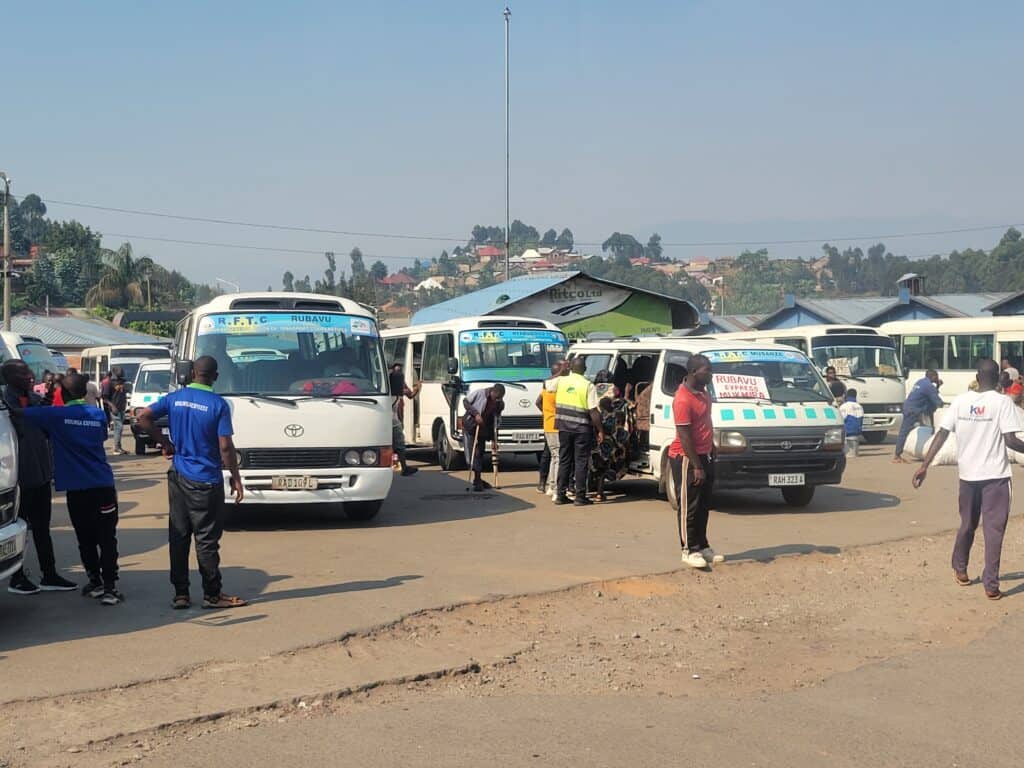
Early morning is the best time to catch a matatu – they start around 6am. Locals travel early, so matatus fill up fast, and traffic is light.
Prices are fixed – there’s no tourist price. One company may charge a little less, usually because their fleet of matatus is in a poorer condition. It’s worth paying a little extra for additional comfort.
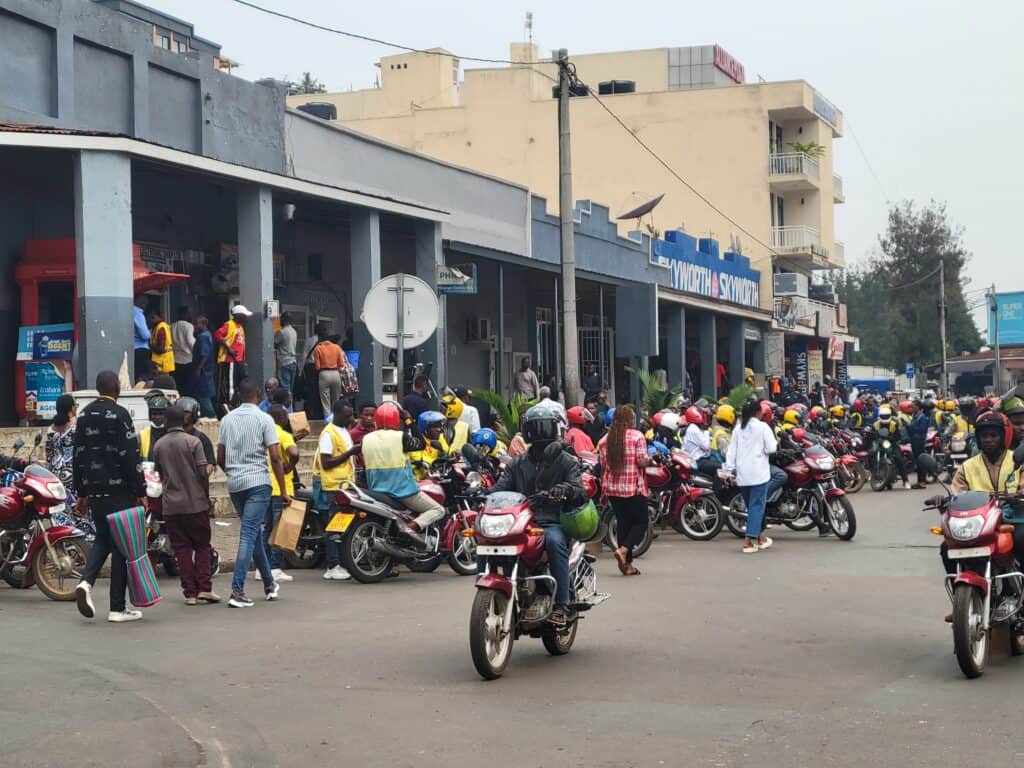
Motorbike taxis, called bodas, are literally everywhere in towns and cities. Matatus go from town to town; bodas go from neighbourhood to neighbourhood. They are cheap, and the top pick for locals. In Kenya, two passengers are permitted, but it’s often safer to take one each. Bags aren’t a problem; the driver will place it on the petrol tank in front of him. Helmets aren’t common, so bodas won’t be an option for everyone. Peak-hour traffic isn’t a problem, as bodas weave easily through traffic. Always agree on the price before getting on a boda.
Kenya, like Western countries, also has large buses. They are used mainly for international and long-distance journeys and nearly always depart at night, when they have the road to themselves.
Finding the correct stage, matatu, or bus won’t be a problem. Kenyans are helpful and speak English – don’t hesitate to ask for directions or help.
Police checkpoints are common but rarely require you to do anything,
Want to know where to go on public transport in Kenya? Check out our Kenya adventure for tips and insights from our journey
Tanzania – Catching Public Transport
Tanzania is almost identical to Kenya when it comes to public transport. The only real difference is the name. Here, a matatu is called a dala dala, and they operate just like in Kenya. Bodas are also in every city, town and village, with the same rules as in Kenya. Tanzanian boda drivers have a reputation as being a bit dangerous, especially in Dar es Salaam. From our experience, they can be a little reckless and fast, but they will slow down when asked.
Large buses, like in Kenya, are used for long-distance and international journeys, almost always travelling at night. Tanzania is a massive country, with bus trips regularly taking 30-40 hours!
Tanzania has another popular mode of public transport – the shared car. These can be quicker than a dala dala, but conditions are a little uncomfortable. Three people often share two seats, so shared cars are best for shorter trips between towns. In smaller rural areas, shared cars are often the only option for longer-distance travel.
Getting around Tanzania using public transport isn’t difficult. Locals are friendly and ready to point you in the right direction. As English isn’t the national language, communicating with boda drivers can sometimes be tricky. They will usually know the names of major landmarks such as markets or popular restaurants. It’s a good idea to look up the name of a landmark near your destination as a backup.
Police stops are common. Since dala dalas usually carry too many passengers, the driver may hand a little money to the officer before continuing the journey.
Want to experience Tanzania like we did? Check out our Tanzania travel guide to plan your adventure
East African people are incredibly welcoming, and so are their public transport systems.
Uganda – Catching Public Transport
Uganda is very similar to Kenya and Tanzania. Minivans are called matatus, and motorbike taxis are called bodas. Bodas are the best way to get around Kampala, as traffic here can be a real challenge. It can take hours to get into or out of the city, so always depart as early as possible.
Long-distance buses are popular in Uganda and connect the main towns. Avoid overnight trips – they have a poor safety record.
For more safety tips, read: East Africa – Is It Safe for Tourists?
Kampala has multiple matatu and bus parks, so confirm which one you need to be at in advance. The Central Taxi Park in the city centre has to be seen to be believed. Upon arrival, you might be concerned about how things are going to work, but it’s actually quite well organised. Outside the capital, all cities and towns have matatus and bodas. As you get more remote, a shared car will be your only option for longer trips. No matter how small the town or village, there will always be a few bodas available.
Uganda’s public transport is great – you can go anywhere. Parts of the country become mountainous, particularly in the south and west, so travel can be slow. As you get further from major towns, English speakers become fewer, but there will always be someone around who can help. In small rural towns, you may have to wait hours for a shared car to fill up – consider spending a night and getting the first car departing in the morning.
Wondering how we travelled Uganda and found its hidden gems? Our Uganda travel guide has all the tips from our adventure
Rwanda – Catching Public Transport
Rwanda is a small country, so getting around it is super quick and easy compared to its much bigger neighbours. Most buses depart from Kigali’s busy Nyabugogo bus station. Large buses head to international destinations, while smaller minibuses service the country. Unlike the rest of East Africa, they depart on a schedule, so you won’t be waiting for hours for your ride to fill up. Each regional town has one main station, making things even easier. Destinations are clearly displayed in the front window, and there is usually a toilet stop around the halfway mark.
Prices are fixed and displayed somewhere inside the bus. Rwanda has speed limits and cameras, so drivers are safe. Expect the most orderly and well organised public transport system in the region, but also the most expensive.
Although French is the official language, most people speak some English. At bus stations around Rwanda, men will often approach you and offer to help you find your bus. They receive a small tip from the driver for bringing customers, but may still ask you for an additional tip – it’s not necessary. Accept help if needed; it can be very useful if you have no idea where your minibus is.
Motorbike taxis, called motos, are plentiful. In Rwanda, helmets are compulsory and only one passenger per bike is allowed. They operate all over Kigali and in every other town and village in the country.
Catching public transport in Rwanda is very easy. Destinations are clearly displayed, buses run on time, and each town has only one main station. Buses stop for a toilet break, follow speed limits, and carry only the legal number of passengers. Enjoy the scenic journeys – Rwanda’s countryside is beautiful from the bus window.
Curious how to travel Rwanda independently? See our Rwanda travel guide for practical tips and experiences from our journey
Burundi – Catching Public Transport
Burundi is the most challenging country in East Africa to navigate using public transport. The country is currently in the middle of a fuel crisis, meaning many buses are off the road. With people unable to get fuel for their cars, queues for public transport can stretch for hundreds of meters.
Small compact cars operate as taxis in the capital, Bujumbura. These vehicles have a blue stripe and cruise the streets searching for clients.
Authorities prohibit motorbike taxis, or motos, from operating in central Bujumbura, so you’ll only find them on the outskirts of the city.
Long-distance buses travel to neighbouring Tanzania, while the Rwandan border remains closed.
At present, getting around Burundi on public transport is very difficult. We used a shared car at the border to reach the capital, local taxis within the city, and joined a tour to explore the rest of the country.
Want to know what it’s really like to travel Burundi? See our Burundi guide for practical advice and our favourite experiences
Final thoughts on catching public transport in East Africa
Public transport throughout East Africa will more than likely exceed your expectations. With a little planning and plenty of time, there’s almost nowhere you can’t reach. Most of the population relies on public transport to get around, so it’s no surprise that costs are affordable. Travelling takes time, you need to be patient. Vehicles can take a while to fill up, and it can get frustrating when drivers stop and start regularly – but that’s simply part of life here.
Once you leave the cities behind, the scenery can be incredible. During our adventure, we saw all sorts of things and made plenty of new friends along the way. People across this region are welcoming and helpful, and in some of the more remote areas, you can feel like a bit of a rockstar – it’s all part of the fun. The secrets to using public transport in East Africa are simple – depart early, be friendly, and don’t be in a rush. And never be afraid to ask for directions. East African people are incredibly welcoming, and so are their public transport systems. It’s more than just a ride; it’s an adventure.