
Ever wondered if the Maldives is more than just luxury resorts? Curious what everyday life is really like in the capital, Malé? The Maldives – Beyond the Resorts is our personal experience exploring this small country in 2025. We share our insights on where to stay, where to eat and drink, and things to see and do. Our guide reflects our travel style and aims to provide useful things to know before visiting this obscure destination.
Some links may be affiliate, meaning we earn a small commission at no extra cost to you – this helps us keep sharing honest travel inspiration.
The Maldives ‘the last paradise on earth.’ Depending on your idea of paradise, some parts of the Maldives may be described this way. ‘Country of sun and ocean’ would also be fitting. Composed of more than a thousand coral islands, there is certainly no shortage of beaches and sand. One of the world’s smallest countries, the compact capital Malé is home to around half the population. With such a strong focus on luxury holidays, Malé is often overlooked by visitors. Yet the Maldives offers far more than resort life alone, making it an especially intriguing destination to visit.
Why go to the Maldives?
The Maldives is often seen as a tropical paradise, with perfect beaches and turquoise waters full of beautiful fish. This may be the case at one of the many island resorts, a location just like in the brochure, and exactly the type of holiday many visitors are seeking. But this isn’t the real Maldives. In fact, it’s far from everyday life here. The real Maldives can be found where its people live, and that’s not on a resort island. Most locals have never even stepped foot on one. Malé – the capital and largest atoll – is where you can experience the genuine Maldives. Malé is a place for travellers who travel for different reasons: to understand and engage with life in other parts of the world. To truly visit the Maldives, you need to spend time in Malé and learn about life beyond commercial tourism. Life here is unique, distinctive, and like nowhere else.
- Capital: Malé
- Best time to visit: October – April (wet season is May to September)
- Budget/Mid-Range/Couple: AU$150 per day
- Currency: Maldivian Rufiyaa (MVR10 = AU$1)
- Language: Dhivehi
- Visa: No
- Difficulty: 1 (1-basic & 5-challenging)
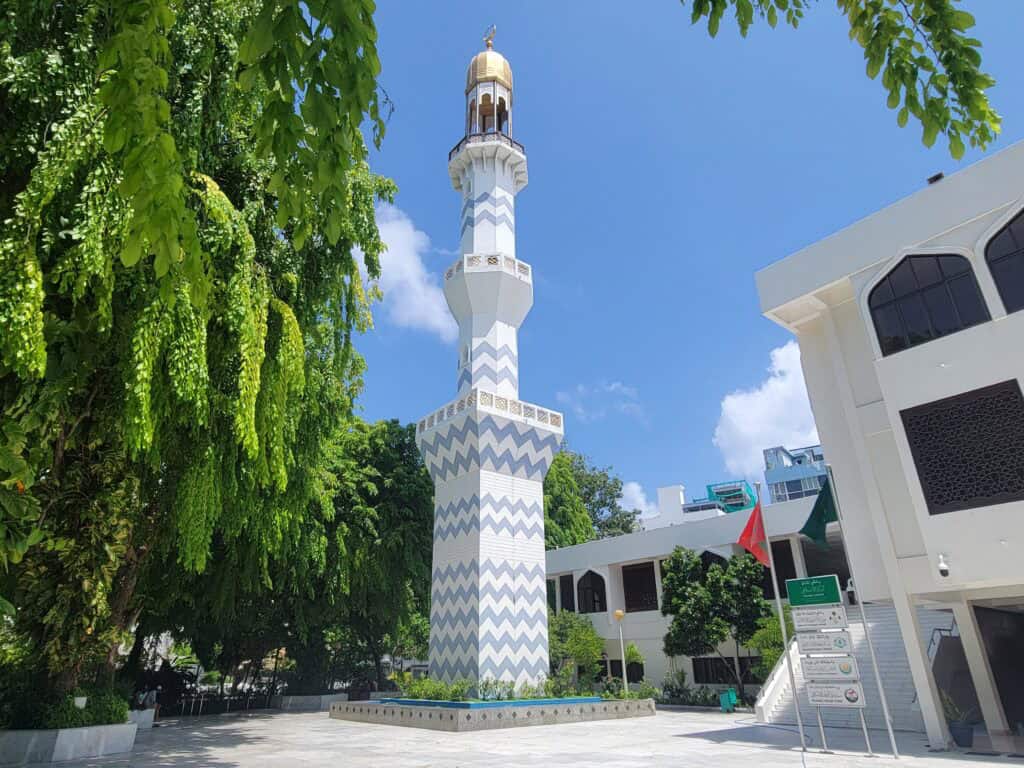
The Maldives
The Maldives receives around two million visitors each year, nearly all of whom stay on one of the many nearby resort islands. Malé, the country’s capital, isn’t on anyone’s itinerary, with tourists preferring the ease of the package tour experience. The capital may not be an ancient wonder of the world, nor a place full of unforgettable attractions. However, it is the only place where you can truly experience authentic Maldivian life. A country’s people and their culture are the heart of any destination, and Malé is no exception. To understand the Maldives, you need to visit its capital, meet its residents, and listen to their stories.
Getting to the Maldives
The Maldives is well connected with Europe, the Middle East, and Asia, making travel here easy. Daily flights link neighbouring Indian Ocean countries such as Sri Lanka and India, making the Maldives a convenient detour if you’re visiting either.
We flew in from Sri Lanka, and then continued on to Trivandrum, India.
Where to stay in the Maldives
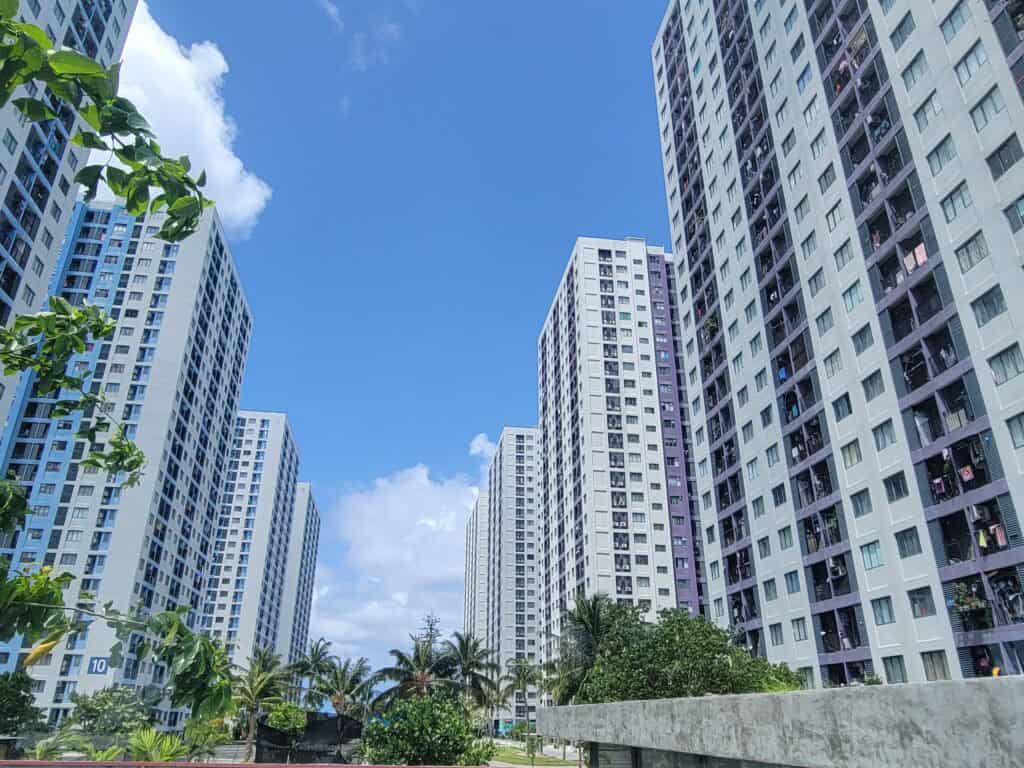
The Maldives consists of two small islands – Malé, the commercial and ancient centre, and Hulhumale, a man-made island reclaimed from the sea. Hulhumale, with its many apartment towers, is where you will find most Airbnbs, while Malé mainly offers hotels.
We stayed on Hulhumale Phase 2, the newest area, reclaimed in 2015. With a welcoming community to immerse ourselves in and turquoise waters to swim in, we enjoyed our stay here.
Where to eat and drink in the Maldives
Maldivian cuisine has a South Asian influence. It’s no surprise that seafood is a key ingredient, along with rice. We enjoyed the variety of vegetable curries on offer, reflecting the islands’ diverse cultural roots. With almost no land-based agriculture, 90% of food is imported. The main market on the waterfront is the place to go for fruit and vegetables, fresh off the boat. Supermarkets tend to have small and limited selections of fresh food.
- Get to Machan Maldives (local Sri Lankan restaurant serving rice and curry. Pleasant upstairs dining area)
- Don’t miss Moon Cafe (great place to taste local dishes. Popular eating spot for hungry locals. Friendly staff, with limited English. Air-conditioned dining area)
- Check out Bombay Darbar (the number one Indian restaurant in the country. Authentic flavours, large selection of dishes, and huge portions)
To understand the Maldives, you need to visit its capital, meet its residents, and listen to their stories.
Things to see and do in the Maldives
Immerse yourself in everyday life while walking the narrow streets of Malé. There are no footpaths, so you’ll be sharing the paved laneways with scooters and small vehicles. Head to the local market to grab some fruit and vegetables – it’s always busy.
Stingrays cruise around at the end of the pier behind the local market. They are easy to spot, along with plenty of other fish.
Hulhumale Beach has a great local vibe. It’s a popular place to swim, with plenty of watersport activities on offer, and a wide range of eating options for all styles and budgets. In the evenings, markets with food stalls spring to life.
The Tsunami Monument is a poignant reminder of the devastation caused by the 2004 disaster, commemorating the 108 Maldivians who lost their lives.
Sultan Park offers shade to cool off and is where you will find several museums and monuments, with souvenir shops located nearby.
Boat trips from Malé include snorkelling and fishing excursions to nearby islands, as well as day trips to local island villages.
Getting around the Maldives
Getting around is simple. Most streets on the main island of Malé are narrow, making walking the easiest way to get around. Modern and reliable buses connect Malé with Hulhumalé; they are cheap, comfortable, and air-conditioned, and you can travel from one end of the island to the other in under thirty minutes. No cash is excepted on buses – you simply swipe your card when you get on. Small, compact cars operate as taxis and can be flagged down if you’re unable to use the bus.
Useful things to know before visiting the Maldives
It’s a conservative country.
There’s very little crime. Safety is not an issue.
To save time on arrival, complete the online arrivals card before you land.
The bus stops right outside the terminal: Bus R9 heads to Hulhumalé, while Bus R1 heads into Malé city. You pay by card on the bus.
Money changers can be found once you exit customs. They offer better rates than banks.
There are plenty of ATMs, and card payments are accepted in most places.
We found the Wise Multi-Currency Card works well here, making payments and ATM withdrawals easy – grab yours here and support our adventures.
eSIM coverage is average.
There are no dogs or land mammals in the Maldives – only cats.
Rubbish and waste management remain a significant environmental issue.
Final thoughts on travelling in the Maldives
The Maldives may be best known for its abundance of five-star luxury resorts, complete with sea planes and extravagant yachts. With more than eighty of these establishments scattered across the islands, this is how most people perceive the country. Don’t be mistaken – this is not the real Maldives. The Maldives has a history and a story to tell. Like any country, it faces challenges and complex issues, and daily life is not always easy. Yet life here thrives, and the people are resilient, happy, and content. To come here and only visit a foreign-owned resort would be an oversight. The country and its people deserve better. Come here and enjoy a resort by all means, but allow some time to experience the true Maldives, beyond the illusion.