
Want to know what it’s like to spend a week in Conakry? Is this untamed city safe? Curious about what life here is really like? This Conakry, Guinea guide (updated 2026) covers everything you need to know, from the best neighbourhoods to stay in to exploring a more authentic side of the city. Our time here took us beyond the main sights, offering a deeper look at what visiting Conakry is really like. We share our insights on where to stay, where to eat and drink, and the best things to see and do, with a focus on practical tips and useful things to know before visiting this more obscure destination.
Some links may be affiliate, meaning we earn a small commission at no extra cost to you – this helps us keep sharing honest travel inspiration.
Conakry, it’s not a place for everyone. It’s hot, dusty, and packed with traffic, fumes and smog. Pollution and burning piles of rubbish line the streets. Military and Police are never far away. Power cuts can last all day. There’s no amazing sights or world class dining options here. It’s a tough place. But Conakry is home to its people. They go to work or school, make a living, care for their families. They go out for dinner and visit friends on the weekend. At first glance things look completely different, but spend some time here and you will see that many things are much the same. Love it or hate it, Conakry won’t care. Life will go on.
Why go to Conakry?
Conakry is Africa. T.I.A. – This is Africa. Its wild, hectic and untamed. Come here to admire and respect the individuals that call it home. Guinea as a country has much to offer, and many people avoid Conakry completely and head inland to the waterfalls and countryside, which is understandable. But some of the most memorable and valuable experiences come from the least expected places and situations. Conakry has a lot to give, in a different way. Come here for an unforgettable experience.
Quick facts for travelling in Conakry
- Country: Guinea
- Capital: Conakry
- Best time to visit: November to December (dry season; wet season is June to September)
- Budget (mid-range couple): AU$100–130 per day
- Currency: Guinean Franc (GNF)
- Language: French
- Visa requirements: Yes (e-visa)
- Travel difficulty: 4 (1 = basic & 5 = challenging)
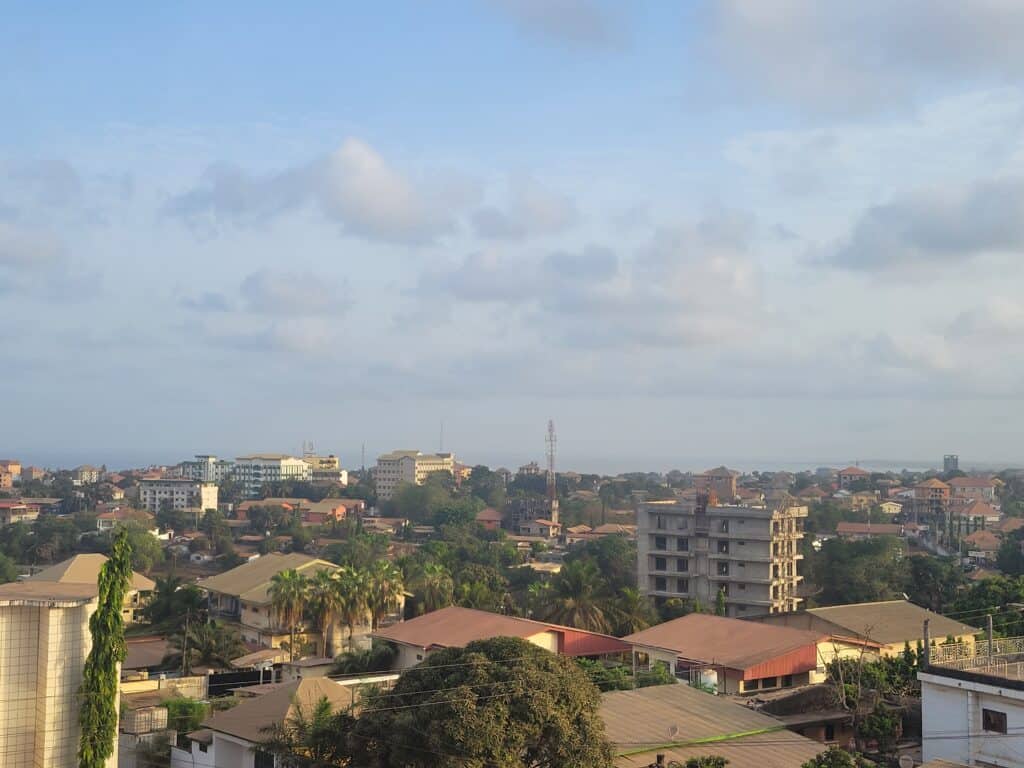
Where to stay in Conakry
Kaloum is a good area to stay. There are some nice eating options, a handful of embassies if you need visas, and a range of accommodation options. Hotel M’Iys has comfortable rooms, 24-hour electricity, and Wi-Fi. The ferry to Freetown also departs from this area if you are heading there.
Kipe is a popular neighbourhood in the north, with good transport connections if you’re heading inland, and only twenty minutes from the airport. It is home to Parkson Mall, a tasty Lebanese restaurant, and plenty of roadside fruit and vegetable stalls.
Where to eat and drink in Conakry
Street food is everywhere around the city, especially from lunchtime until vendors sell out. Standards vary, and while some setups may feel a little basic, it’s an important part of everyday life – and a great way to connect with people while trying simple, tasty snacks like plantain chips. You’ll also find fruit and vegetables sold on most streets.
During our visit, many local restaurants were closed for Ramadan, but there were still some reliable options open, particularly in Kaloum and Kipe.
- Get to Istanbul Restaurant & Pâtisserie in Kaloum (delicious food, plenty of options, and the owner speaks English)
- Check out 7Days Indian Restaurant in Kaloum (a solid choice. especially for vegetarians, open daily from 11am)
- Don’t miss 7-Eleven Lebanese Restaurant in Kipe (generous portions, the falafel plate was a standout. Wi-Fi is also available)
It can feel like a harsh city, but the tough exterior is softened when you connect with the people.
Things to see and do in Conakry
Immerse yourself Get amongst it. This city is big and the main roads are hectic. Walk along quiet, dusty back streets and interact with the locals and street vendors who live there. It can feel like a harsh city, but the tough exterior is softened when you connect with the people.
Keïta‑Fodéba Acrobatics Centre Where performers train and put on shows you can watch. Expect unbelievable acrobatic feats you won’t want to miss.
Witnessing Friday afternoon prayers is a truly memorable experience. The streets fill with people performing their prayers wherever they can find room to lay their prayer rugs.
Getting around Conakry
It’s a massive place, and getting around can be slow going. The quickest, and also the most dangerous option, is a motorbike taxi. They zoom in and out of traffic. Make sure you find one with a spare helmet. A regular taxi is the safest choice. Prices are negotiated before you get in. The back streets offer safety from the crazy traffic to walk short distances.

Getting to Conakry
Conakry has flight connections with Europe, Dubai, and other African countries. There is a ferry service to Freetown, Sierra Leone (3-4 hours) on Sundays, Wednesdays, and Fridays. Taxis leave daily for neighbouring Guinea-Bissau and Sierra Leone.
If you’re planning to explore more of West Africa, you might also find our Guinea-Bissau travel guide and our Sierra Leone travel guide helpful
Useful things to know before visiting Conakry
Conakry has a large Muslim population, so it’s important to respect local customs, especially during Ramadan when opening hours and daily routines can be affected.
Electricity can be unreliable, so confirm with your accommodation that they have a backup generator.
Expect plenty of pollution and rubbish, and very busy streets.
Not everyone will be friendly and welcoming, but be the person that you want them to be.
Forget about public toilets.
Money is exchanged on the street. People will offer their services randomly as you pass by.
Final thoughts on travelling in Conakry
Conakry is a unique beast. It’s not like its neighbouring countries. It’s raw, buzzing, and alive. Keep up, or you’ll get left behind. It’s not pretentious. It’s not ashamed. It won’t change for you. But come with an open mind, and appreciate the experience. You won’t forget it anytime soon.