
Wondering what it’s like to explore Sierra Leone? Curious about where to immerse yourself in local life and discover tasty street food along the way. Sierra Leone – Useful Information for Travellers is our personal experience exploring this country in 2024. Our adventure includes Freetown and Tiwai Island. We share our insights on where to stay, where to eat and drink, and things to see and do. Our guide reflects our travel style and aims to provide useful things to know before visiting this obscure destination.
Some links may be affiliate, meaning we earn a small commission at no extra cost to you – this helps us keep sharing honest travel inspiration.
Why go to Sierra Leone?
Sierra Leone is a hidden gem. Once infamous for its blood diamonds, ‘Sweet Salone’ remains largely untouched by mass tourism, and you will feel like an early explorer in some parts of the country. With rainforests, mountains, and beaches, there’s plenty to discover. The country also offers history and culture, lively markets, street food, and welcoming people. English is the official language, it’s affordable, and public transport will get you to most places. Sierra Leone is a place to come if you like authentic travel experiences.
- Capital: Freetown
- Best time to visit: November – June (wet season is June to November)
- Budget/Mid-Range/Couple: AU$100 per day
- Currency: Leonie (Le14= AU$1)
- Language: English
- Visa: Yes
- Difficulty: 2 (1-basic & 5-challenging)
Freetown
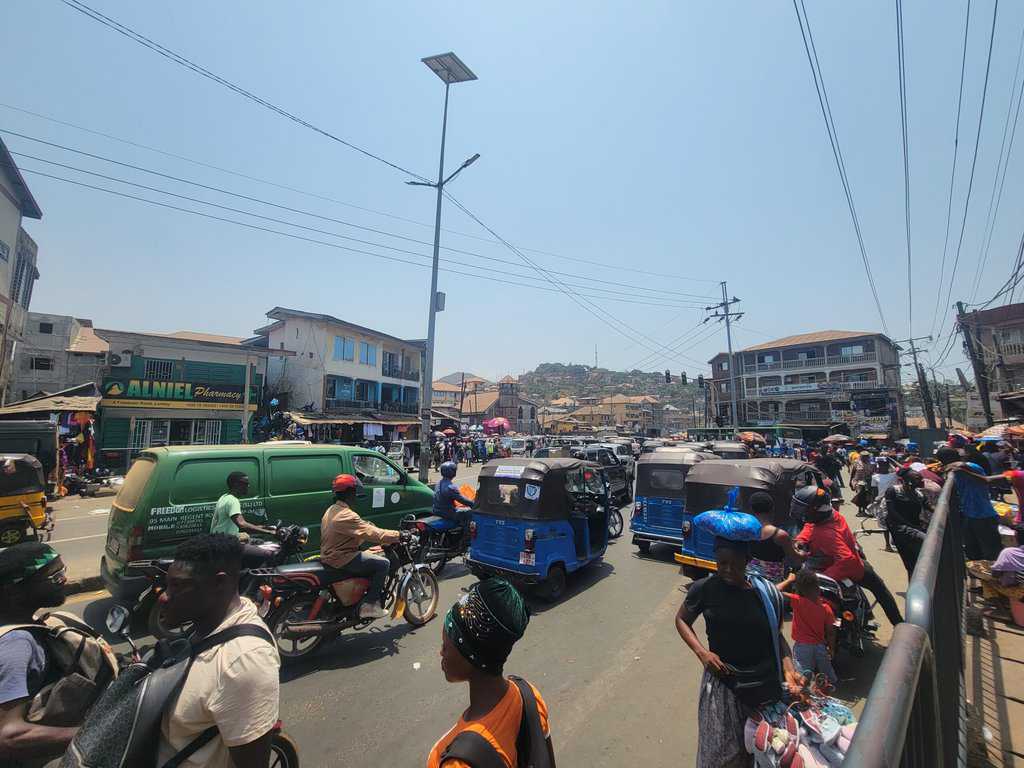
Central Freetown is a hive of activity, packed with locals and congested with traffic. Markets sprawl onto the streets. People push their trolleys and goods along the roads. It’s hot, chaotic, and can be overwhelming, with people competing for your attention and a potential sale. But you will get used to it – and may even come to enjoy it. For the locals, it’s all they know, this is everyday life. While there are a few points of interest in the city centre, the main attraction here is the rhythm of daily life. When you’ve had enough, wave down a KeKe and speed off to an outer suburb. Within twenty minutes, you can be on a beach or sitting on your balcony enjoying the view. Freetown also makes a great base for day trips into the interior.
Getting to Freetown
Freetown is easily reachable from the surrounding suburbs, with several forms of public transport The KeKe (like a Tuk Tuk) is the quickest and cheapest option. You can also reach Freetown by ferry from Lungi or by sea coach express from Conakry.
We travelled from Conakry and share useful tips for planning your trip
Where to stay in Freetown
Options in central Freetown are limited and expensive. Your best bet is to stay in one of the many surrounding suburbs, such as Aberdeen, Lumley, or Wilberforce. Here you will find local guesthouses, Airbnb’s, and hotels, and things will be a little bit less hectic! We stayed in Airbnb homes in Aberdeen and Wilberforce. Both areas were great and allowed us to meet locals and experience everyday life in different ways. Dusty back streets, daily street vendors, and churches filled with people singing and preaching loudly. This is Freetown.
Where to eat and drink in Freetown
Women set up umbrellas and small cooking stations along the streets and at transport hubs all over Freetown and the surrounding area. You will find fried bananas, rice, sweet potato, and local staples like fufu and groundnut soup. If you’re unsure what something is, just ask – they are happy to try and explain. We loved the street food here and found plenty of veggie options, as well as local-style restaurants. Supermarkets sell locally made products, including organic coffee. Coffee Couriers has a great little café off Lumley Road that’s worth a visit if you love coffee.
- Get to Oasis Cafe (tasty smoothies and pancakes)
- Don’t miss Brimelia Vegetarian (friendly place with nice local style meals)
- Check out Bottom Mango Hub (great selection of street food)
Things to see and do in Freetown
Lumley Market This is a great place to come to experience some local life. It’s a thriving mass of activity, with things packed in every available space. All sorts on offer. Best selection of fruit and vegetables. Drinking a freshly cut coconut in the middle of the hot chaos is a great experience!
Big Market Found in central Freetown, this is the place to shop for clothes and souvenirs. Head upstairs to browse carvings and masks.
National Museum A small collection of national treasures with an interesting display of items. A knowledgeable guide is available to share insights. There’s a toilet.
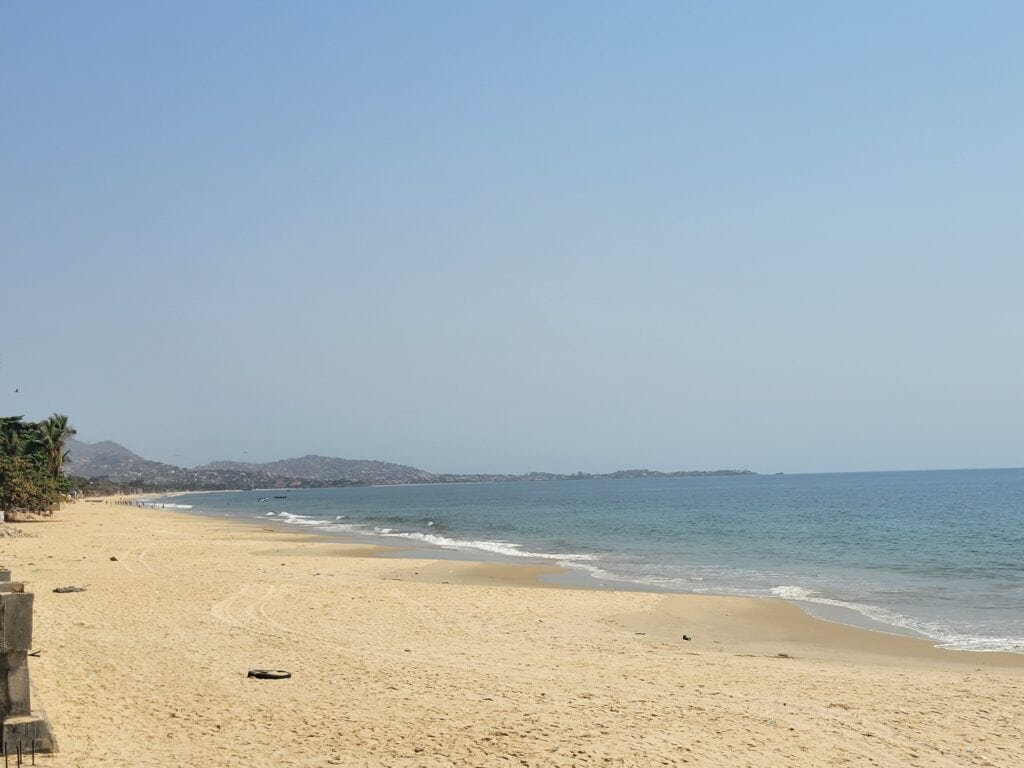
Lumley Beach A long stretch of beach that is lined with bars and restaurants. Popular on the weekends with the locals. Check out where the crowds are for the best atmosphere.
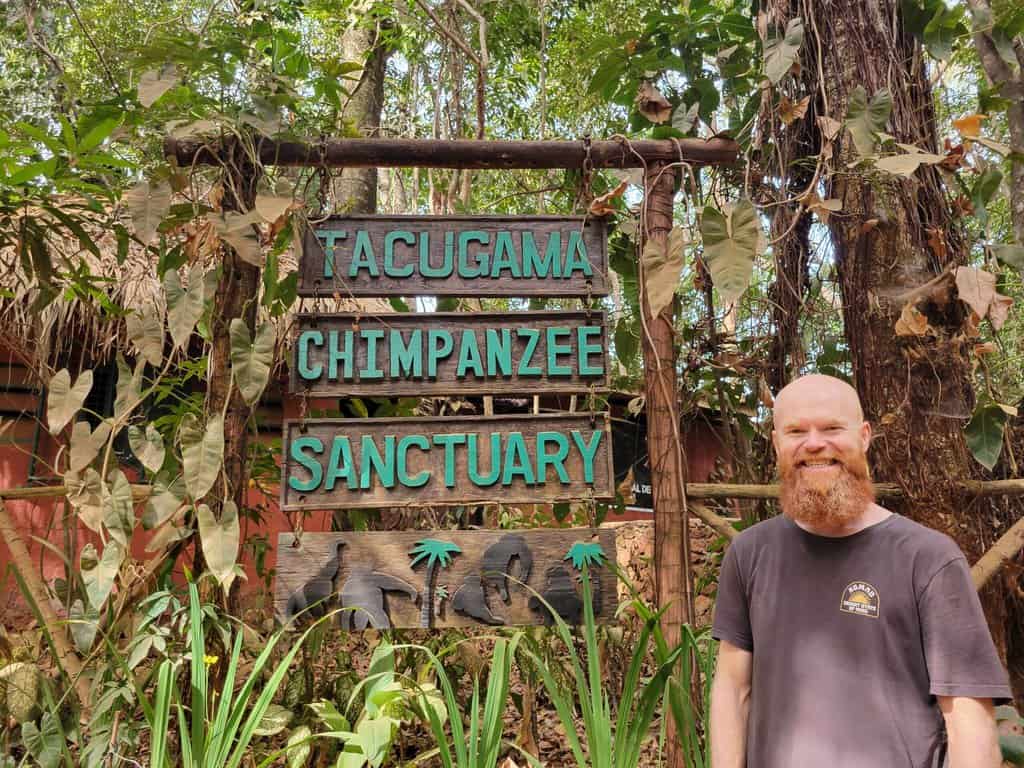
Tacugama Chimpanzee Sanctuary A conservation project that’s well worth a visit. The sanctuary faces the challenging task of protecting chimps in a forever shrinking habitat. The tour lasts about an hour, and you will get to see the chimps in three different enclosers at various stages of rehabilitation and release. The sanctuary is a 30-minute ride out of town – grab a KeKe. You can have the driver wait for you or arrange another ride back after the tour. Accommodation is also available on-site and supports the amazing work they do here.
Bunce Island An eerie reminder of our shameful past. Reaching the island on your own can be difficult and expensive, as it requires chartering a boat. The best and most affordable way is to join a tour (US$80), but these only go on demand when full, so plan in advance. Visit Sierra Leone offer tours and useful advice – www.visitsierraleone.org
Getting around Freetown
The KeKe is the safest and cheapest way to get anywhere – Le10 per person for short trips, up to Le80 per person for places out of town. If you let the driver pick up other passengers, they will share your cost. Motorbike taxis are clustered at transport hubs and can take you anywhere in a hurry. Public vans also travel the main roads and stop at the marked bus stops.
With rainforests, mountains, and beaches, there’s plenty to discover.
Tiwai Island
One of the last remaining primary rainforests in West Africa. It only covers a small area, but it is home to a large variety of flora and fauna. Famous for its monkeys and chimps, you may even see the endangered pigmy hippo if you are very lucky.
Getting to Tiwai Island
If money is no problem, the easiest way is to hire a car and driver in Freetown. They will take you all the way to the river crossing near the park and wait for your return, usually in a day or two. Expect to pay US$500-600!
Another option is to catch public transport, though this involves several changes and will take most of the day. The first step is to get the bus to Bo (three to four hours). Change buses at Bo and head to Potoru (about three hours). From Potoru, you’ll find a ride to Kambama (30 minutes), where you’ll cross the river to the park. The park provides a boat to take you across the river to Tiwai Island.
Where to stay on Tiwai Island
The park offers basic rooms (US$40-50), or you can bring your own camping equipment. The accommodations are clean and comfortable. Breakfast is included, and you can order additional meals and eat with the rangers. Alternatively, you can bring your own supplies and prepare meals in the park’s kitchen.
Things to see and do on Tiwai Island
Guided walks are the highlight, especially in the early morning or evening. The guides are very informative and if there are any species to see, they will point them out. There are also a few trails that you can explore on your own. It’s possible to arrange visits to local village or river trips – just talk with the guides to plan your activities.
Getting to Sierra Leone
Freetown is reachable by sea coach ferry from Conakry, local taxis from neighbouring countries, or via the sparkling new Lungi International Airport, which offers a reasonable selection of flights from African cities such as Accra and Banjul, as well as a direct flight from Belgium in Europe.
Useful things to know before visiting Sierra Leone
People here are welcoming, and it’s a safe country to visit.
You will more than likely be approached by the homeless and hungry. They are not aggressive or pushy, they are desperate. Buy someone a drink or sandwich when you can.
Someone will offer to help you catch a KeKe or taxi, which can be very handy. They will expect a few coins.
Street food is everywhere, usually from around lunchtime until sold out. Each day of the week will be a different snack. Sunday is a rest day.
Tourism is in its infancy. Excursions are expensive. Allow time to wait for groups to save money.
Lungi International Airport is across the bay, a four-hour taxi ride. The fastest way to the city is the thirty-minute express ferry, or the local ferry, which is cheaper but slower and less frequent. There’s duty free, shops, cafes, and a currency exchange at the airport.
Arriving by sea coach from Conakry is easy. The port is in Aberdeen. There’s no duty free or shops, it’s basic. Money changers and taxis will be waiting outside once you clear the customs desk.
Money changers sit at the main transport hubs all over the city. You get a better rate for larger notes. It’s a huge bundle of notes, so change a couple of days’ budget at a time. It’s a good idea to get the currency changer’s phone number, so if there’s a mistake, you can chase it up. Once you find a currency guy you like and trust, keep using him.
There are regular power outages. Find accommodation that has solar or generator backup.
The Liberian Embassy were hard to deal with, and the price and waiting time can randomly double.
The Ghanian Embassy are very helpful and friendly.
Freetown Mall has a large supermarket, with a good selection of locally made products and imported goods.
Final thoughts on traveling in Sierra Leone
Sierra Leone deserves more. It’s a beautiful country with plenty to offer. It may be one of the poorer countries on the planet, but like many other destinations in West Africa, there’s a richness that’s hard to describe. The people have very little, and children may ask for something to eat. Talk to them, share your time, spend $1 and buy them a sandwich or drink, it will make their day. But this is not what the country should be remembered for. War and Ebola had a devastating effect, no doubt, and recovery is slow, but Sierra Leone will recover. It will never shed those dark times – they have shaped its identity today.
Sierra Leone is a lion, like the name suggests. People here are strong and free. Nothing can keep it down for long. Curious travellers will come. Unexplored places will be easier to reach, and you won’t have beaches to yourself. Resorts are coming, progress is coming. Sierra Leone won’t be obscure for much longer. Deserved recognition is on its way. Experience Sierra Leone now and be part of the change.