
Interested in exploring vast stretches of desert and coastline? Wondering where Namibia’s most amazing wildlife hides? Namibia – Discover City Life and Wild Landscapes is our personal experience exploring this country in 2024. Our adventure includes Windhoek, Swakopmund and Etosha National Park. We share our insights on where to stay, where to eat and drink, and things to see and do. Our guide reflects our travel style and aims to provide useful things to know before visiting this obscure destination.
Some links may be affiliate, meaning we earn a small commission at no extra cost to you – this helps us keep sharing honest travel inspiration.
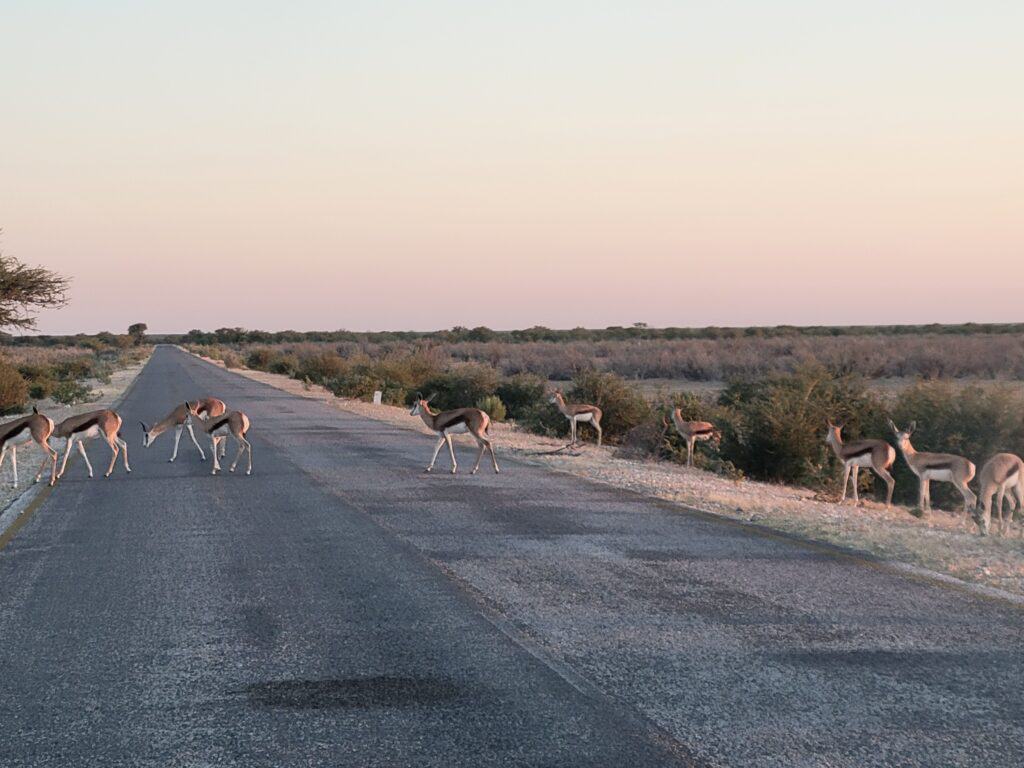
Namibia, ‘land of the brave.’ With more than half the country covered by desert, it certainly takes brave people to live here. The second least densely populated country on the planet, life here isn’t easy. ‘Land of roaming wildlife’ would also be appropriate. With more animals than people, and the world’s largest rhino and cheetah population, there’s no shortage of adventure and wildlife spotting opportunities. With great infrastructure, proud and welcoming locals, and a growing tourism industry, Namibia is an amazing destination to explore.
Why go to Namibia?
With over two hundred species of mammals, Namibia is an obvious destination for animal lovers. Possibilities of self-drive or organised safaris are plentiful and affordable. Vast stretches of desert and coastline are waiting to be explored. Namibia is safe, with decent roads, a variety of accommodation options, and an interesting history and culture. Direct and regular flights from Europe and Africa make planning a trip here easy. Namibia is a destination for travellers of any age, and a perfect introduction to the African continent.
- Capital: Windhoek
- Best time to visit: May – October
- Budget/Mid-Range/Couple: AU$150 per day
- Currency: Namibian Dollar (NAD12= AU$1)
- Language: English
- Visa: NO
- Difficulty: 1 (1-basic & 5-challenging)
Windhoek
Windhoek is a laid back and quiet city. Lacking any major attractions, most people only spend a night here or skip it all together. But cities are where the majority of the population lives, and time in them allows you to get an idea of daily life. Windhoek is no different. There’s a pleasant and easy central area to walk around, with loads of shops and malls to get supplies or souvenirs. There are trendy breweries and bars around town too, along with restaurants, a couple of parks, and some interesting markets. It’s the perfect place to prepare for your trip inland, or relax for a few days after you return from checking out the country.
Getting to Windhoek
The capital is a thirty-minute drive from the airport. There are no buses or public transport options. You will need to arrange a shuttle or pick-up. Taxis are plentiful. A ride into the city will set you back between NAD400-500.
Where to stay in Windhoek
Windhoek has every budget covered when it comes to places to stay, from five-star hotels to hostels. Anywhere around the main downtown area would be a good choice.
We stayed out of the city centre, in Klein, a lovely neighbourhood over the hill. It was a forty-minute walk or quick taxi ride into town. Klein has everything you need from car hire to supermarkets and restaurants. It’s not as busy as the city centre, with no large hotels. Guesthouses and Airbnbs are available in the area.
Where to eat and drink in Windhoek
Namibia is a meat-eating country. Vegetarian meals are generally easy to find, while vegan options can be a little harder to come by, though they’re not impossible and are becoming more popular. Great supermarkets make self-catering easy and enjoyable. The Klein area has an abundance of quality places to eat, from cafes to wine bars and fresh produce markets. Here are a few of our favourite spots in Klein.
- Get to the weekend Green Market (a beautiful biomarket offering fresh produce, artisan breads, and takeaway meals such as vegan Indian dishes. Nice locally made products too)
- Don’t miss Cassia Thai (lovely food and quick, friendly service)
- Check out Stellenbosch Wine Bar (has a cool outdoor beer garden and relaxed atmosphere)
Things to see and do in Windhoek
Namibia Craft Centre is the best selection of locally made arts and crafts in the country. There’s a nice café inside too.
Namibia Craft Market is on the main street in an old carpark. This is the best place to get carvings and masks.
Wernhill Mall is a large modern mall where you will find a good selection of western products.
Botanical Gardens is a pleasant spot on the hill for a stroll. The plants in Namibia are really unique.
Getting around Windhoek
Windhoek and Namibia don’t have a public transport system. The only way to get around is to hire a car, catch a taxi, or walk. If you stay in the downtown area, it’s easy to get around on foot.
Swakopmund
Swakopmund is literally an oasis in the middle of the desert. Situated on the Atlantic Ocean and surrounded by vast desert landscapes, it’s an ideal base for exploring the Skeleton Coast, the Namib Desert, and nearby Walvis Bay. The town is a popular holiday spot not only for travellers, but also for locals from Windhoek and neighbouring South Africa. Old German buildings decorate the town, many still in use today as shops and accommodation, giving Swakopmund its distinctive character. With a pleasant beach, a wide range of places to eat, and plenty of adventure opportunities only a short drive away, it’s an easy place to settle into – the kind of place where you plan on coming for a day, but stay for a week.
Getting to Swakopmund
Swakopmund is a four-hour drive west of Windhoek, passing through mostly desert terrain. There is no public transport, but a private company operates a once-daily shuttle van, with pick-up and drop-off directly from your accommodation. Bookings are required at least two weeks in advance. For enquiries, call +264812631433. It is also possible to fly from Windhoek.
Where to stay in Swakopmund
There’s an abundance of options when it comes to places to stay, from flash hotels to camping. Staying in an old heritage building, or close to the beach are good choices. Guesthouse and Airbnbs on the outskirts of town offer a chance to experience living in the desert.
Where to eat and drink in Swakopmund
All diets and eating preferences are covered, from vegan to meat eater, with fresh seafood featured on most restaurant menus. An easy place to find somewhere for a good coffee, delicious smoothie, or healthy meal. A huge Food Lovers Market makes self-catering easy too.
- Get to Wild Rocket Cafe (busy spot, healthy meals and top smoothies)
- Get to Garnish Indian (tasty vegan options and friendly staff)
- Check out Farmganic (local produce store with fresh fruit and vegetables. Grab a coffee from Slowtown coffee roasters next door)
Things to see and do in Swakopmund
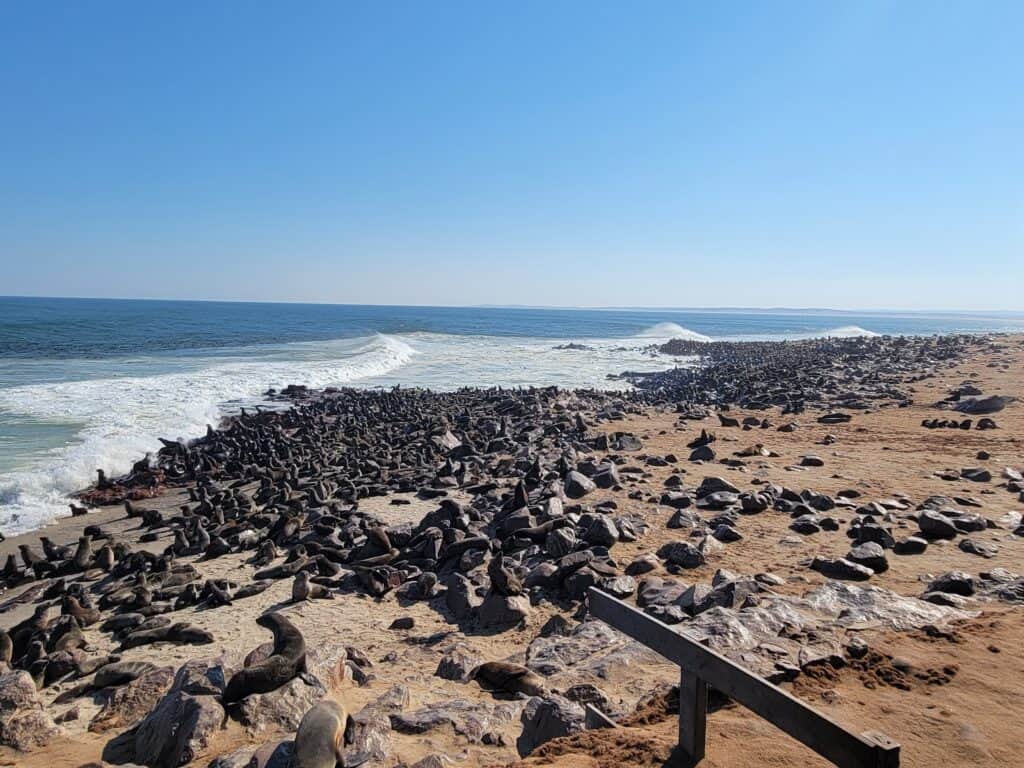
Cape Cross Seal Reserve is worth the drive and makes a cool half day trip. Keep an eye out for wildlife on the way.
Walvis Bay is another fishing village within easy reach.
Swakopmund Town has loads of interesting shops to keep you busy. Additionally, it offers nice cafes and a variety of restaurants.
Tours to various destinations both north and south depart from town regularly.
Adventure Activities such as quad biking and fishing are easy to arrange.
Getting around Swakopmund
You can walk all around town with ease. It’s very flat. Taxis are always looking for your service if you need to give your feet a break.
The number and variety of animals on offer here is extraordinary.

Etosha National Park
Namibia’s number one attraction, Etosha is a must-visit for anyone in the country. Covering a vast area around a massive salt pan, there’s wildlife galore – from lions to aardvarks. Accessed through four different gates, seeing the entire park in one visit is almost impossible. The roads are in a woeful state, and even short distances can take time to cover. Facilities within the park are limited, it is truly a wild place. It’s not to be missed. The variety and number of animals here are extraordinary, making Etosha one of our favourite national parks for viewing wildlife.
Getting to Etosha National Park
The easiest way to access the park is via the Anderson Gate in the south, about a four-hour drive from Windhoek. There are also gates to the north, west, and east of the park. Flying from Windhoek is possible, but expensive. Numerous tour companies offer transfers from hotels in the capital – or even from the airport – directly to the park. There is no public transport to the park. Hiring a car is the most popular choice for getting to and exploring the park, with prices from around NAD 1,200 per day.
Where to stay in Etosha National Park
A handful of government-run lodges are located at various points within the park. While the locations are amazing, these lodges tend to be expensive and are generally poorly managed, with accommodation and food often below expectations. The benefit of staying inside the park is that you can go on a night safari offered by your lodge – something not possible from outside the park after it closes at 6pm.
Staying outside the park in a privately run lodge or guesthouse is a much better experience, and there is no shortage of options. We stayed at Tarentaal Guest Farm, about twenty-five minutes from Anderson Gate. Many of the lodges also have camping areas for those with their own equipment.
Where to eat and drink in Etosha National Park
There are no restaurants or eating options inside Etosha National Park. The only resources are a basic shop offering a few soft drinks and packets of crisps. If you are staying inside the park at a lodge, all meals are usually included. Most guesthouses outside the park also provide meals, either included in your stay or available for an extra charge – check before you book. The closest grocery store is in Outjo, about an hour’s drive from the park entrance. Self-catering is popular at the park’s camping areas, but you will need to bring all your own supplies with you.
Things to see and do in Etosha National Park
Looking for Wildlife Exploring the many roads while keeping your eyes peeled for animals is what visiting Etosha is all about. The waterholes are usually the best spots to see wildlife, as they all get thirsty. The roads are in terrible condition, so driving is slow – allow plenty of time. Early mornings and evenings are particularly good for spotting animals, but with the sheer abundance of wildlife in Etosha, you’re likely to see plenty at any time of day.
Getting around Etosha National Park
Having your own transport is the best way to explore the park – this is what we did. It allows you to go at you your own pace, drive where you want, and stop whenever you want. If you’re staying at a lodge, safari jeeps will be an option. There is no public transport within the park. Visiting independently and arranging to join a lodge safari is possible, but it’s not straightforward.
Love wild adventures? Explore our top 3 national parks in East Africa for even more unforgettable wildlife encounters

Getting to Namibia
Namibia has direct flights from Germany and neighbouring African countries. Crossing by land from South Africa, Botswana, and Zambia is also a common practice. We flew in from neighbouring Angola.
Useful things to know before visiting Namibia
South African rand is legal tender in Namibia and has the same value.
Paying by card is common.
The Wise Multi-Currency Card works well and can be loaded with South African rand to make travel money easier. We take Wise everywhere – get yours here and support our adventures!
eSIM coverage is reasonable.
There are animals everywhere, so keep your eyes open.
The airport is about thirty minutes from town. There is no public transport system, so having your own transport is essential.
Driving is on the left, and gas stations are plentiful.
Namibia is very safe, and people are friendly.
The city centre has hungry and homeless people who may approach you for food.
It’s well set up for visitors of all ages.
Supermarkets and alcohol stores are easy to find.
It’s a very tidy country by African standards.
Final thoughts on travelling in Namibia
Namibia is Africa for beginners. Travelling here is straightforward and easy. You can stick to the main attractions, or if you feel a bit more adventurous, there are more remote corners of the country to discover. It’s a very stable, safe, and visitor-friendly place – you can’t go wrong. The ease of spotting wildlife in places like Etosha National Park is amazing, and there’s no need to spend loads of money on safaris like other countries. The variety of mammals is extensive, and with relatively flat terrain and low growing vegetation, sightings are assured. Exploring on your own is simple and problem free. It’s a different type of destination, with a focus more on natural attractions and wildlife rather than cities and man-made objects. A lot of the time, you will feel like you’re the only one in the country, surrounded by vast expanses of nature, which has its own unique allure. Namibia is a place that will exceed your expectations, a place you will tell your friends about and add to your list of places to return to. Namibia, a destination for nature and wildlife lovers.