
Were the Madagascar movies some of your favourites? Dreamt of coming here to see all the weird and crazy creatures? Not sure where or how to start planning and preparing for a trip? Madagascar – Adventure, Wildlife, and What It’s Really Like is our personal experience exploring this country in 2025. Our adventure includes Nosy Be, Antananarivo and Fianarantsoa, with overnight trips to nearby parks. We share our insights on where to stay, where to eat and drink, and things to see and do. Our guide reflects our travel style and aims to provide useful things to know before visiting this obscure destination.
Some links may be affiliate, meaning we earn a small commission at no extra cost to you – this helps us keep sharing honest travel inspiration.
Madagascar, ‘the red island’. This refers to the rich reddish-brown soil that covers much of the country. Once, around 85% of this land was covered by trees and nature; sadly, today, ‘the country of deforestation’ might be just as fitting. Yet small, shrinking pockets of wilderness remain, offering a glimpse of what this huge island must once have looked like. Madagascar is home to landscapes and wildlife found nowhere else on Earth. Travelling here can be challenging, but it’s also an extraordinarily unique and rewarding experience.
Why go to Madagascar?
Madagascar has a mystical feel about it – a magical place from fairytales or our imagination. Large numbers of endemic species, along with many weird and wonderful landscapes, can be found here. One of the largest islands in the world, it’s also one of the least visited countries on the planet. Non-existent infrastructure, terrible roads, and unreliable flights make Madagascar a destination for those seeking true adventure. It’s a country with untapped potential, with just as many challenges. Visit Madagascar for an experience that’s possible nowhere else.
- Capital: Antananarivo
- Best time to visit: April – October (wet season is November to May)
- Budget/Mid-Range/Couple: AU$150 per day
- Currency: Malagasy Ariary (MGA2900 = AU$1)
- Language: Malagasy and French
- Visa: Yes. E-visa
- Difficulty: 4 (1-basic & 5-challenging)
Nosy Be
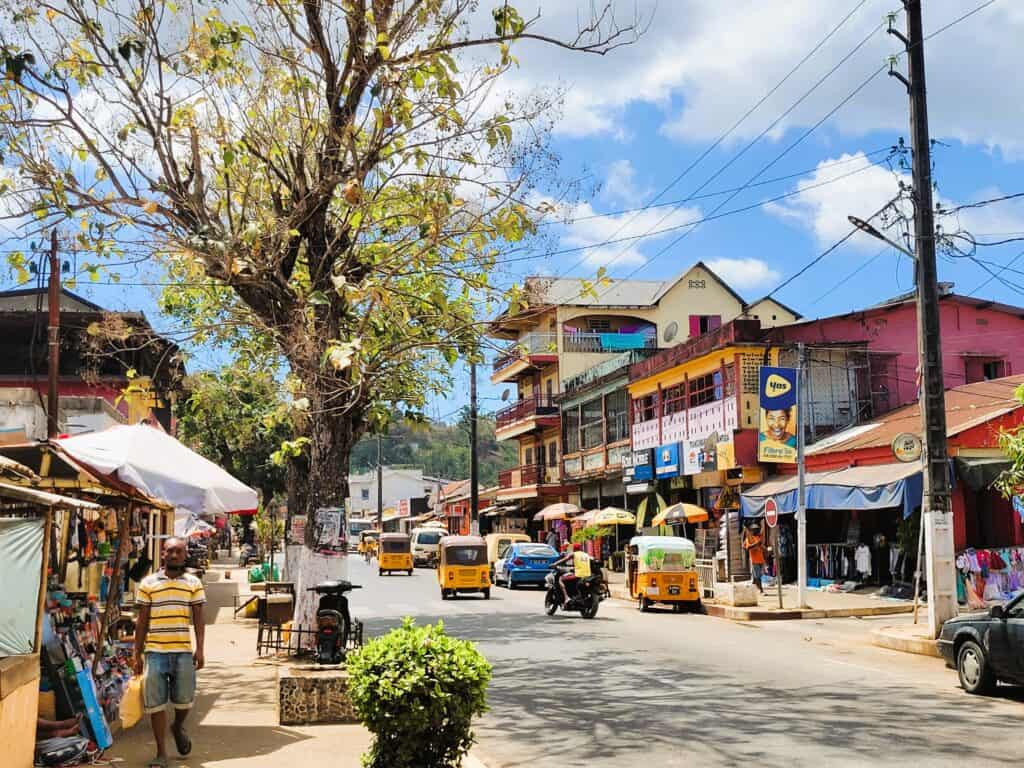
Nosy Be is an island off the northwestern coast of Madagascar. It feels quite different from the mainland – almost like a country of its own. Beaches, resorts, cafes and sunshine, along with regular flights to Europe, make the island an attractive holiday destination for Europeans. Nosy Be is the most visited spot in Madagascar, accounting for around 35% of the country’s limited tourist numbers. With good roads, accommodation, restaurants and a range of different activities, it’s a pleasant place to spend some time.
Getting to Nosy Be
Nosy Be has the country’s best connections, with regular flights to Europe. It’s also possible to fly here from South Africa and Tanzania, or to arrive from Comoros or Mayotte.
We flew in from Comoros, via Mayotte. The airport is about a twenty-minute taxi ride from Hell-Ville.
Where to stay in Nosy Be
Hell-Ville is the islands biggest town, and where you will find most of Nosy Be’s restaurants, banks, and resources. There are some hotels around, but most visitors head to beach resorts on different parts of the island. We stayed in a local Airbnb near the village of Dzamandzar, about a thirty-minute tuk-tuk ride from Hell-Ville. Hell-Ville is ideal if you want access to the best restaurants, but if you’re after beaches and authentic island life, basing yourself in one of the smaller villages around the island is a better choice.
Where to eat and drink on Nosy Be
Hell-Ville is the place to find restaurants. Outside of town, you’ll mostly come across local-style street food stalls with basic facilities. Pasta served with fish or chicken is a staple, along with fried banana and manioc. Vegetarian food options are limited, but we found local restaurants were happy to cater even if a vegetarian meal wasn’t on the menu. Street food stalls also usually have a few simple vegetarian sides available.
- Get to Manava (spacious upstairs dining area, with views of the market, a varied menu, great prices, and friendly service. Has Wi-Fi)
- Don’t miss Casa Mofo (busy with locals and visitors. Coffee is great, meals are small. Has Wi-Fi)
- Check out local street food (we enjoyed eating at the local stalls near our Airbnb. They were simple, basic places, but the food was hearty, and the people very loving)
Things to see and do on Nosy Be
Hell-Ville has a number of historic buildings, including the market and neighbouring theatre. Old wooden houses and shops provide plenty of photo opportunities.
Vaniala is an excellent shop to find locally made, natural plant-based products such as deodorants, balms, and oils.
Beaches are the main reason people visit Nosy Be. Ambatoloaka, Madirokely, and Andilana beaches are all stunning. Most have local cafes or restaurants where you can enjoy a drink or meal while watching the sunset.
Parc National Lokobe is home to lemurs and chameleons. Visiting the park is best on a tour, which can be arranged in Hell-Ville or through your hotel or host.
Boat trips to offshore islands are easy to arrange, as are whale watching and diving excursions, depending on the time of year.
Immersing yourself in everyday village life is easy on Nosy Be. Head to any of the small villages, wander through the back streets, check out the market, or grab a street snack – it’s a great way to experience local life.
Getting around City
Tuk-Tuks are the number one form of transport on the island. They are well suited to the tiny roads, and are literally everywhere. Just tell the driver where you want to go, agree on a price, and hop in. You can also pick up other passengers along the way to save money. Taxis are available too, and most hotels offer airport shuttles. The ride from the airport into Hell-Ville takes around twenty minutes.
Antananarivo
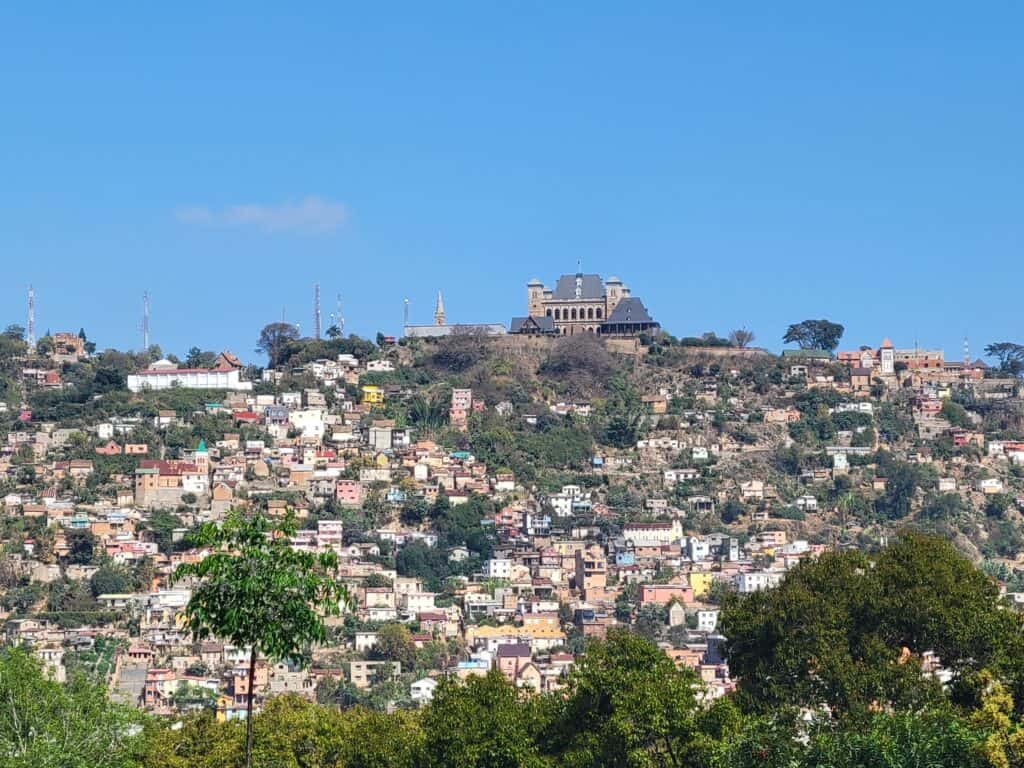
Antananarivo can be a mix of different things, depending on your perspective. To some, it’s a city of colourful houses, all jostling for space on one of its many hills. Surrounded by rice fields and peaceful lakes, it certainly has an unmistakable allure. Early morning bells echo through the valleys, welcoming a new day. To others, it’s a polluted mess of traffic and fumes – a place best avoided altogether. Either way, this is Antananarivo; this is Madagascar. The city has much to offer, and skipping it would be a mistake. Its sights, people, and markets offer a glimpse into Malagasy city life and the everyday challenges its residents face.
Getting to Antananarivo
Antananarivo is one of the hardest places to reach. With only one flight from Paris, getting here requires careful planning. There are connections from three African cities, as well as flights from Nosy Be, but schedules are irregular and fares are expensive. Booking well in advance is your best bet. The airport is around thirty-minutes from downtown, and taxis are the only practical way to reach your accommodation upon arrival.
Where to stay in Antananarivo
The downtown area is the most convenient place to stay, with easy access to the city’s attractions, restaurants, and largest supermarkets. It’s also the busiest, noisiest – in your face – part of the capital. Finding a more chilled neighbourhood, might be a better option. We stayed in Mandroseza, near the lake. It was much more relaxed, yet only a twenty-minute ride from the city centre. Antananarivo has a reasonable selection of hotels and Airbnbs to suit all budgets. If you’re only stopping for a couple of days, then the city centre is the best place to base yourself. For longer stays, a neighbourhood outside the centre may be more enjoyable.
Where to eat and drink in Antananarivo
There’s a distinct French flair when it comes to food in Antananarivo. There are cafes and pastry shops galore, alongside street vendors cooking up all sorts of local delicacies. Don’t expect much in the way of hygiene, but the experience is part of the city’s charm. Numerous fine dining opportunities are around, for those who want to splurge. Super U supermarkets offer the best range of supplies.
- Get to Tamboho Restaurant (tasty food with a wide variety of dishes. Delicious vegetarian and vegan options, a pleasant atmosphere, and a nice terrace)
- Don’t miss Restaurant Le Paris-Delhi Indian Fusion (English speaking staff and excellent vegetarian Indian dishes)
- Check out Analakely Market (a lively, vibrant Malagasy market where you can find almost anything. Street food is cheap, with a large variety on offer. Chicken, zebu, and fish are in almost every dish, so finding vegetarian options can be a challenge)
Things to see and do in Antananarivo
Haute-Ville is the upper part of town. The area cascades down from the city’s highest hill and is where most of the historical architecture is located. The Rova, or palace, is the most impressive, while the lookout below the Rova offers superb views. Nearby you’ll find the Palais de Justice, and the impressive Palais d’Andafivaratra.
Jardin d’Antananarenina is a peaceful spot to take a break from the hustle and bustle of the packed streets.
Basse-Ville is the lower part of town. Hot, dirty, and full of chaotic traffic, it can feel overwhelming – but this is where the action is. Welcome to Antananarivo.
Analakely Market is the biggest and oldest in Madagascar. Hundreds of brightly coloured stalls compete for your attention, offering thousands of items, though food products dominate. You’ll find fresh fruit and vegetables, spices, medicinal herbs, fish, and meat.
Marche Artisanal de la Digue is a one stop shop for souvenirs – bring your bargaining skills.
Lemur’s Park is a private wildlife reserve, rescuing lemurs from the pet trade and habitat loss. They run a breeding program with the goal of reintroducing lemurs into the wild. The park is not far from the city and an easy taxi ride.
Royal Hill of Ambohimanga is a UNESCO world heritage site. Once home to the royal family, there’s a number of interesting wooden buildings to explore. Getting here by taxi is cheap and easy.
Visit Madagascar for an experience that’s possible nowhere else.
OVERNIGHT TRIPS from Antananarivo
Because of Madagascar’s woeful roads, day trips from the capital aren’t really an option. Even short distances take most of the day, so a one- or two-night road trip is necessary. Parc National Andasibe-Mantadia is well worth the time, effort, and cost. It’s the closet rainforest to Antananarivo, and you’ll have a great chance of seeing multiple lemur species, as well as chameleons, indri’s and aye-ayes.
The nearby town of Andasibe makes a handy base, with some nice places to stay and eat. Getting there requires your own transport, but organising a tour from Antananarivo is straightforward, as is hiring a car with a driver. We used MadaAssist, a local company that helps arrange trips and find guides. They’re super helpful and easily reachable on WhatsApp: +261 375 347 019. You design your own trip, tell them what you want to see, and they get quotes from local guides. Once you make your selection, you pay online, and they pick you up and return you to your accommodation. Easy.
Getting around Antananarivo
The tumultuous traffic issues in the city means getting around is usually slow. If you can, walking is by far the best option. Old Mercedes vans operate as minibuses, serving most areas of the city, with their destinations displayed in the front window. Old Citroens are the standard local taxis – heap, readily available, and often shared with other passengers. Motorbike taxis are also an option, though they’re not as popular here as in other African cities.

Fianarantsoa
Fianarantsoa is arguably Madagascar’s most charming town. The upper part of town is undoubtably the most pleasant, with cobbled streets and brick houses. Churches are plentiful, some over 150 years old. Surrounded by trees, rivers, and lakes, it’s a lovely place to spend time. The main reason people come here is to explore the nearby Parc National Ranomafana, one of the country’s best parks. Fianarantsoa is also an excellent place to organise tours, hire a car or guide, and stock up on supplies.
Getting to Fianarantsoa
Getting down here is a challenge. The drive takes around nine hours due to the pot-holed roads. Catching public transport is an option, but the bus can take even longer. Cotisse Transport is one of the best companies in the country, offering comfortable, modern vans with Wi-Fi and regular stops for breaks. Tickets can be booked online, and in advance.
Where to stay in Fianarantsoa
Hotels and guesthouses form the main options when it comes to accommodation. Upper town has some lovely choices, while the outskirts are ideal for those seeking a bit of peace and quiet in a countryside setting.
Where to eat and drink in Fianarantsoa
The eating scene around town is mostly local style establishments. Upper town is where you’ll find any European style restaurants and streetside cafes, while lower town around the market is more focused on street food.
- Get to Petite Bouffe (great variety, with a mix of local and Western style dishes. Gets busy)
- Don’t miss La Riziere (the view here is amazing. A cooking school with great prices and tasty food)
- Check out Babi Food (local Malagasy food with friendly staff)
Things to see and do in Fianarantsoa
Ambozontany Cathedral is one of the country’s most impressive structures, with a fascinating history.
Lalana Rova or Palace Street, with its lanes and alleys of old brick homes and buildings, oozes with history. Exploring them is great fun.
Trekking and hiking options are abundant in the surrounding area, with guides easy to find in the city.
The Information Centre near the Protestant Church, also known as the Brick House, offers useful information, and can put you in touch with local guides.
Immerse yourself in the small market in the lower part of town. Like most markets, it’s full of energy and life.
OVERNIGHT TRIPS from Fianarantsoa
One of Madagascar’s best National Parks lies within easy reach from Fianarantsoa: Parc National Ranomafana. Twelve lemur species live within its borders, together with fossas and aye-ayes. The park contains numerous hiking trials leading to a variety of significant locations. Night walks provide an excellent opportunity to spot nocturnal lemurs that are rarely seen during the day. The diversity of plants found in this primary rainforest is phenomenal, many of which are used as medicine by local tribes.
Visits to the park are only permitted with a guide, and walking is the only way to get around. This is a rainforest, so expect bugs, insects, and leeches – come prepared.
The town of Ranomafana has excellent accommodation options, ranging from jungle lodges to basic homestays. Village visits, hot pools, and a craft market are all nearby and well worth exploring. Many people only come for one night, but a visit here is far more rewarding when you spend two full days exploring the area.
Getting around Fianarantsoa
Walking is the best way to get around town. It’s not only the fastest but also most enjoyable way to navigate the streets. Lower town is a jumble of vehicles, so forget about catching a taxi from there. Private cars, taxis, and tour companies can take you anywhere in the area or further afield. The local information centre can connect you with drivers and guides.
Getting to Madagascar
Madagascar has terrible travel connections, which is one reason it sees relatively few visitors. Nosy Be is much easier to reach than Antananarivo, with flights from several European countries as well as multiple African cities. Antananarivo has only one flight from Paris and is serviced by just a couple its neighbours, South Africa and Tanzania. Flights are often delayed, cancelled, or rescheduled, so it’s best to be prepared.
You may also be interested in: Why Africa Should Be Your Next Adventure
Useful things to know before visiting Madagascar
English is pretty much non-existent
Getting around is difficult, time consuming, and often expensive.
We used the Wise Multi-Currency Card at places that accepted card payments. We take Wise everywhere – grab yours here and support our adventures.
An eSIM works well in Antananarivo, but coverage is limited once you leave the city.
Nosy Be Airport is very basic, with a currency exchange and an ATM that only accepts certain international cards.
Nosy Be can get very hot, especially during the day.
Antananarivo International Airport is modern, with ATMS, currency exchange, duty free, and a lovely bakery.
There are many street dogs in Antananarivo.
Waste management is a significant issue in many areas.
Electricity and water outages are regular nationwide.
Final thoughts on travelling in Madagascar
Madagascar is a Jekyll-and-Hyde country. On one hand there is Nosy Be, with its beaches, resorts, and foreign visitors. On the other hand, there’s Antananarivo and the mainland, where travel is tough and life even tougher. Madagascar has some massive issues – electricity, water shortages, and widespread poverty at the forefront – and people have had enough. They need and deserve better, and are getting tired of waiting. Environmental issues cannot be ignored either. Hundreds of thousands of acres of forest are lost each year to slash-and-burn agriculture. If this continues unchecked, much of the island’s unique wilderness could be gone by 2050. How this has been allowed to happen is an embarrassment, not only for the governing bodies but also on the international stage. Madagascar is a country of stunning landscapes, extraordinary wildlife, and natural beauty – and yet also a country of needless destruction and poverty. For travellers, it will be an unforgettable adventure. Come with plenty of time, come with plenty of patience. Come with an open mind. It may not be easy, but it will be memorable.
For more inspiration, discover why Madagascar earned a place on our list of Obscure Destinations to Visit in 2025 – after visiting ourselves, we can confirm it definitely belongs there