
Want to know what it’s really like to explore the untamed Mauritania? Curious how to immerse yourself in its rich culture? This Mauritania travel guide (updated 2026) covers everything you need to know, from how to get there to what makes it worth visiting. Our adventure took us through Nouadhibou and Nouakchott, offering a deeper look at what travel here is really like. We share our insights on where to stay, where to eat and drink, and things to see and do. Our travel style is independent and immersive, with a focus on practical tips and useful things to know before visiting this obscure destination.
Some links may be affiliate, meaning we earn a small commission at no extra cost to you – this helps us keep sharing honest travel inspiration.
Mauritania, ‘the land of a thousand poets’. Mauritanians are proud of their traditions and culture, and many are happy share their stories with you. With two-thirds of the country covered by desert and ranked among the world’s poorest nations, you might expect the people to be a little downhearted – but that couldn’t be further from the truth. We found people to be welcoming, resilient and content. Is it a destination for the beginner? Not really. Will it make every traveller’s bucket list? Probably not. But with access improving and organised tours becoming more popular, Mauritania is increasingly within reach for the curious and intrepid traveller.
Why go to Mauritania?
With some of the best unspoilt sand dunes on the planet and the vast, magnificent Saharan Desert, Mauritania offers experiences that you won’t find anywhere else. The world’s longest train is one of the main drawcards, and trips to the ‘Eye of the Sahara’ are now becoming possible, attracting the attention of explorers from around the globe. The people and their culture are fascinating, offering rewarding encounters that you will never forget. Cities like Nouadhibou and Nouakchott feel truly out of this world. Mauritania – come here because it’s different. What you will find is unique landscapes, warm people, and the unusual.
Quick facts for travelling in Mauritania
- Capital: Nouakchott
- Best time to visit: November to March (coolest months)
- Budget (mid-range couple: AU$100 per day
- Currency: Mauritanian Ouguiya (MRU)
- Language: Arabic
- Visa requirements: Yes (required for most travellers)
- Travel difficulty: 4 (1 = basic & 5 = challenging)
Nouadhibou
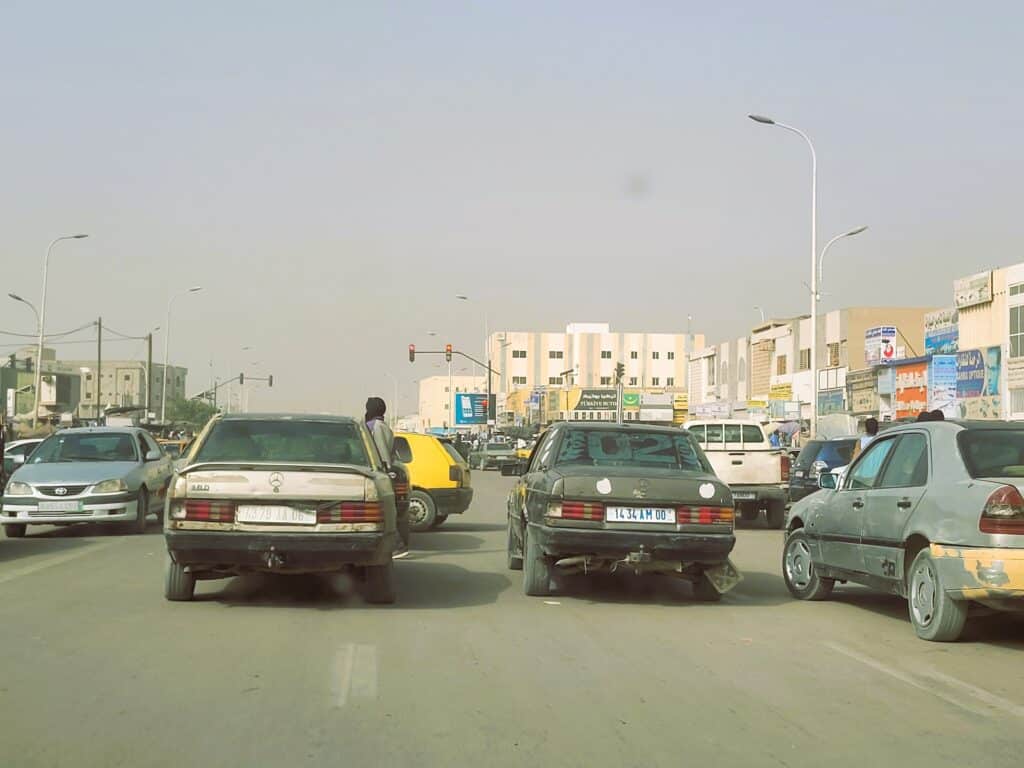
Nouadhibou is a strange and captivating place. It feels a bit like a lawless town in a Western movie. This is the main starting point for trips into the desert or on the Iron Ore Train. There isn’t a late-model car in sight – roads are filled with ancient, beat-up wrecks of cars that you would only find at the scrap dealer back home. Yet, here, if the car runs, it’s roadworthy, and that rough around the edges vibe is part of the towns charm.
Different trades gather on the same street, selling everything from metal supplies and spare parts to cement and basic everyday goods. There are no flashy signs or bright lights here – just what you need to survive in this harsh climate. After a long day crossing the border, Nouadhibou was a welcome stop for us. At first, it may appear run-down and a little dismal, but there’s a comfort around, a safety. People are relaxed, accepting, curious and helpful. It’s a welcoming place to refresh before heading back into the vast desert wilderness again.
Getting to Nouadhibou
Public taxis and vans run from the border to Nouadhibou, a journey of about one hour. The road isn’t in great condition, and you’ll pass through numerous police checkpoints. The officers are friendly and are just there to ensure everyone’s safety – so be polite, follow instructions, and you will soon be on your way.
If you are driving from Nouakchott, expect around six hours on the road, depending on the conditions.
Where to stay in Nouadhibou
We stayed at Nouadhibou Guesthouse and highly recommend it. It was a true oasis! It’s run by two Australians from Perth who know how to make you feel comfortable. Rooms include a lovely breakfast delivered to your door. It’s easily one of the best spots to stay in the city. Ricardo is a great host WhatsApp+22231072966.
Accommodation options in town are limited, but another popular resting spot is Villa Maguela.
Where to eat and drink in Nouadhibou
You’ll find fresh bread and coffee are easy to find, but don’t expect other items from home. Downtown, the grocery store has enough basic supplies to self-cater (including pasta, olive oil, nuts and dates). The local fruit and vegetable market is small but offers enough variety to make a nice meal; fruit, however, is limited and pricey.
- Get to Galloufa Spanish Restaurant (lovely homemade meals. There was no sign when we visited. Located at the bottom of town – ask your accommodation or locals for directions)
- Don’t miss November 24 Supermarket (best selection of supplies and they also change money here)
- Check out Restaurant AMMOS Ndb (cozy Mediterranean-Italian menu with vegetarian-friendly options)
Things to see and do in Nouadhibou
Immerse yourself in local life – find the grocery store, stop at a street vendor for fruit or nuts, and grab some dinner at a local restaurant. Interacting with the locals is what makes your stay memorable. Experience the wonderful mix of culture and religion – the traditional Mauritania dress worn by men is a standout. Along the way, you’ll likely see goats rummaging through rubbish piles, cows wandering freely, and donkeys patiently waiting with their carts.
Jump in a taxi and enjoy the ride!
The Port Head down to the port for some great photo opportunities – if there is visibility!
Seal Colony There’s a seal colony out on the point, but you will need to talk to the coast guard to get access. Again, this will depend on visibility too!
Getting around Nouadhibou
Cars serve as taxis – drivers will often stop and offer you a lift while walking. While taxis are a popular choice to get around, the town centre is easy to explore on foot.
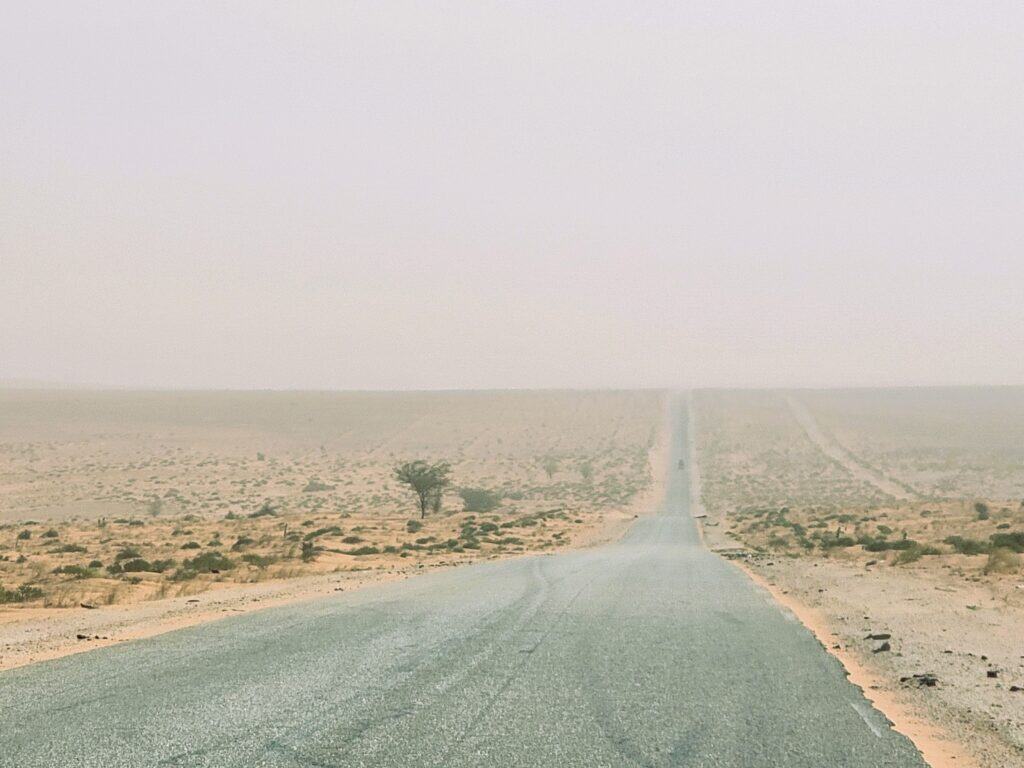
The harshness of the desert, combined with the sheer remoteness, gives the landscape a raw beauty like nowhere else.
Nouakchott
The capital of Mauritania, Nouakchott is a bit more orderly than other parts of the country. The style of the people is eye catching, especially on a Sunday. The styles reflect the amazing mix of people, cultures and religions. Its busy, chaotic and dusty – but somehow it works. People here are strong and focused, many working hard to reach their goals.
Nouakchott is also practical for travelers: it’s the best place to get car repairs, stock up on supplies, organize excursions, or enjoy a few days at a comfortable hotel or guesthouse. Once you leave the capital, things become remote very quickly.
Visa Information for Mauritania and Senegal There is a Senegalese Embassy in the city if you need to arrange your visa before travelling south. If you are planning to cross at Diama, be aware that visas are not always issued at the border, so it is best to organise your visa in advance to avoid any issues when entering Senegal.
Getting to Nouakchott
The drive from Nouadhibou to Nouakchott takes about seven hours. Expect twelve checkpoints, limited petrol stations, and some sections of terrible road – so allow extra time, bring fuel, and pack water and food. From Nouakchott to the Senegalese border at Diama takes around five hours, with the last two hours on a bumpy, dusty dirt track. Once through customs, the drive to St. Louis in Senegal is only thirty minutes. Visas are not issued at this border – you must have one in advance if required.
Nouakchott is accessible by air from Paris, Istanbul and a handful of other African cities. Flying is the quickest and simplest option, while driving from Senegal is the shortest overland route.
Where to stay in Nouakchott
The city offers numerous accommodation options to suit most budgets. We stayed at a guesthouse near the city center — AU$70 for a double room, including breakfast of bread, pastries, jam, and coffee. Many places provide free secure parking, on-site restaurants, or even a pool. A comfortable room with a cold shower, easily accessible, is just the relief you need after hot and dusty outings exploring the city.
Where to eat and drink in Nouakchott
Nouakchott has a wider variety of restaurants, including French and Indian options. Some hotels and guesthouses have restaurants too.
- Don’t miss The India Gate (delicious vegetarian and vegan dishes, the staff are friendly and happy to answer questions)
- Get to Paul Boulangerie (freshly baked breads and pastries)
- Check out Big Market (best selection of fruit, vegetables and Western staples)
Things to see and do in Nouakchott
Immerse yourself in the city. Walk, drive, or take a taxi to experience it in action — it’s priceless. The style, strength, and resourcefulness of the people are truly remarkable. Stroll to the bakery for a coffee and pastry, pop into the supermarket for supplies, or enjoy lunch at a local restaurant. Get right into the heart of the action.
Saturday Market A bustling melting pot of activity – definitely worth a visit.
National Museum of Mauritania When we visited, it was unfortunately closed.
Port de Peche Head down early to watch the fishermen return. Allow plenty of time – it’s hectic. Be friendly and patient, some of the fisherman will engage in friendly banter.
Grand mosque A popular sight.
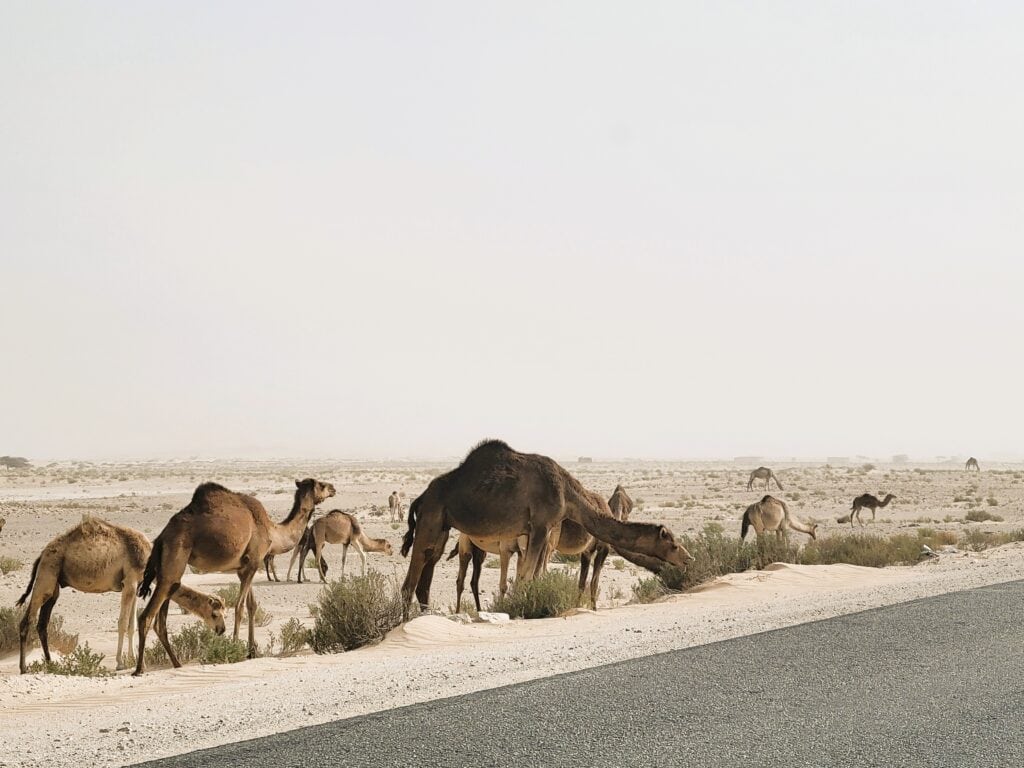
The Desert Mauritania is home to two national parks: Banc d’Arguin and Diawling, both rich in birdlife. Visits to these parks require a guide. We highly recommend Dahid at Agence Levrigue, who provides excellent tours (email: dahid2@yahoo.fr). There’s no fixed cost, so you’ll need to negotiate a price; expect to pay AU$200 for a day trip. Overnight camping in the parks is also possible. While the parks aren’t teeming with wildlife, during our trip we saw camels, warthogs, and plenty of birds. Other species in the region include gazelles, monkeys, hyenas, and scorpions.
Getting around Nouakchott
Taxis are the easiest and most relaxing way to get around. Driving here can be challenging if you’re not used to the way things work. The sandy, dusty streets and heat make long walks difficult, but short strolls to cafés, shops, and restaurants are enjoyable.
Getting to Mauritania
We experienced Mauritania in 2024 while participating in the Dakar Challenge. This meant we travelled by car, which is really the only way to travel around the country. Apart from local taxis that operate in the two cities, long distant public transport is virtually non-existent. Border crossings are far from easy, but visas are issued at the border.
We drove down through Morocco and Western Sahara, and entered Mauritania at the land border near Gueruerat (Western Sahara). We had the help of a local fixer which made the process much easier – but it was still painfully slow. There are no toilets or services at the border, and your passport will likely be taken away for an hour or more before eventually being returned. You can cross unassisted on your own, but having basic Arabic and French, plus experience at remote land borders, is highly recommended.
Once inside Mauritania, you can organise transport or tours, but expect this to take days before anything is ready to depart. Large parts of the east of the country are off limits. Desert trips or the famous Iron Ore Train need to be organised in advance. Mauritania is a cash society — bring plenty to cover all your expenses.
Including Mauritania as part of a wider overland journey — or combined with a neighbouring country — works well. Having your own vehicle is a major bonus. Entering Mauritania from Senegal in the south is the most straightforward overland route if you’re driving. You would need your own car, as rental companies do not allow their vehicles to enter Mauritania.
Visa Requirements for Mauritania Since January 2025, Mauritania has introduced a new e-Visa system for most travellers. You now need to apply online before your trip through the official ANRPTS portal. Once approved, print your e-Visa (it includes a QR code) and bring it with you when you travel. You will still pay the visa fee on arrival, so make sure to carry the exact amount, as no change is given.
Useful things to know before visiting Mauritania
Many people don’t like having their photo taken – it’s culturally sensitive. Be respectful, always ask, and don’t point a lens without permission. You may get a finger wave in disapproval if you do.
It’s hot, windy and dusty most of the year. Bring a good shampoo, because desert dust is difficult to remove.
Sandstorms are common and can last for long periods. They affect visibility, air quality, and every crevice of your gear. A protective pouch for your mobile phone is essential to keep sand out.
Some roads are in terrible condition and travel takes much longer than expected.
There’s not a huge variety of fruit and vegetables.
Children will run over asking for money or small gifts.
People are friendly, curious and usually happy to help.
You won’t see many other travellers. There is no eSIM and most international SIM cards don’t work.
Modern conveniences, big supermarkets and tourist information centres basically don’t exist.
Bring cash. Paying by card is rare.
English isn’t widely spoken, but those who do often enjoy the chance to practise and share their story. Ask questions — it’s the best way to learn about real life here.
Final thoughts on travelling in Mauritania
Mauritania is its people – and watching them go about their day-to-day life is something we’ll never forget. It’s a tough existence here, but they somehow manage to do it day after day, with a smile on their face. Travelling here isn’t easy, far from it. But if you’re after a new experience, something different and truly unique, without all the crowds, then it’s a destination for you. There’s a lot of driving involved, and in many ways these ended up being our favourite days. The harshness of the desert, combined with the sheer remoteness, gives the landscape a raw beauty like nowhere else. Seeing how people live and adapt to this environment is incredible — and worth the journey alone. Don’t come here for gourmet food and five-star hotels. Come to support the people, to appreciate their resilience, and to experience a side of the world that most will never see.