
Looking for an epic overland adventure? One which raise’s money for good causes, and allows you to see some of West Africa’s hardest to reach destinations? Then the Dakar Challenge is for you. The Dakar Challenge starts in the UK, and finishes in Banjul, The Gambia. It’s not a race, and you can take as much time as you like. Most competitors take around three weeks to reach the finish line in Banjul. There is no set route, and you can explore Europe and Morocco at your own pace, or convoy with fellow teams, the road is yours to shape. Eventually, all paths lead to a rendezvous in Western Sahara, near the Mauritanian border, where the real challenge begins. We completed the Dakar Challenge in 2024. We share our personal experience and practical tips for anyone thinking about this ultimate overland adventure through West Africa.
Some links may be affiliate, meaning we earn a small commission at no extra cost to you – this helps us keep sharing honest travel inspiration.
Not to be confused with the Paris to Dakar Rally, the famous race which is now is held in Saudi Arabia, the Dakar Challenge is a charity event. When you reach Banjul, you will hand over your keys and farewell your trusted car, which will be cleaned and polished, before being auctioned off, with the funds raised going to various local charities. Since 2005, when the Dakar Challenge started, more than one million dollars has been raised for local organisations in The Gambia.
The Dakar Challenge invites adventurers to make the journey their own. We spent nine weeks travelling in ‘Dusty‘, our Dakar Challenge car. We explored Spain, Portugal, Morocco, Western Sahara, Mauritania, Senegal and The Gambia.
Sounds like the ultimate overland adventure, right? Let’s go!
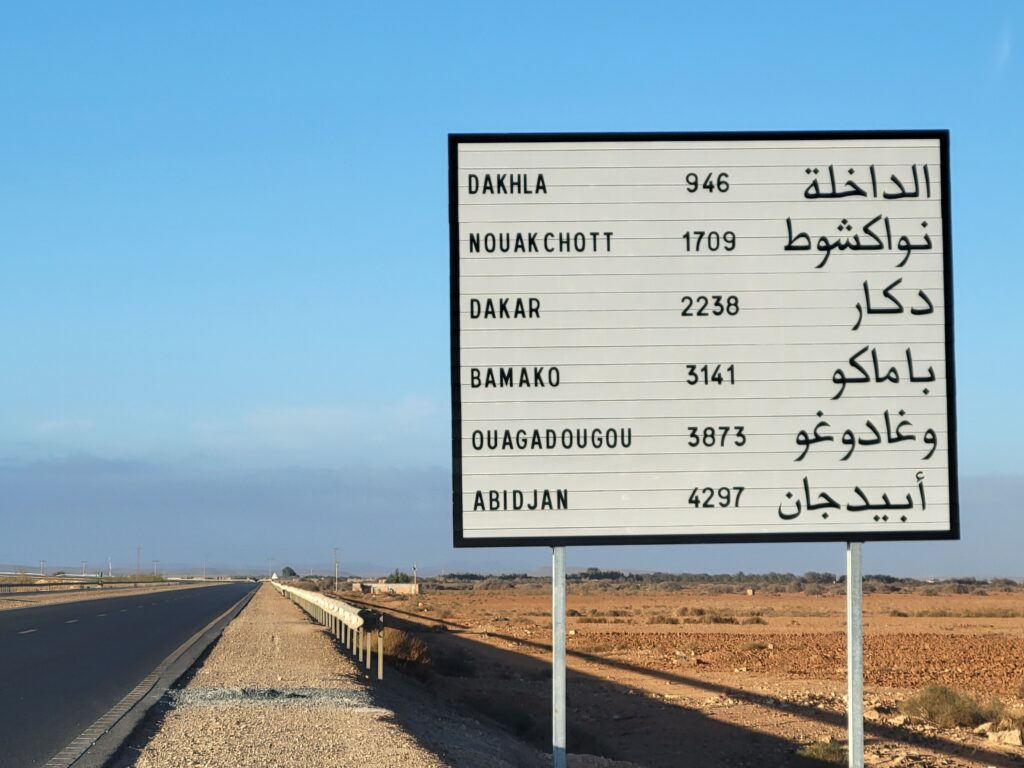
So where to begin?
The first step is to contact the challenge manager, Dakar Dave, via the official website: www.dakarchallenge.co.uk. He will give you instructions on how to make your entry payment (around AU$800). This covers all the necessary arrangements on the ground. Once you’ve paid, you will get the roadbook – a detailed race guide packed with loads of valuable information, practical tips, and the required Fiche forms you’ll need along the way.
After that, the adventure is yours to shape. You’ll plan your own route, choose your stops, and map out the journey ahead.
Now you need some wheels. Look for something reliable and not too expensive – remembering that all cars must be donated at the end. Prepare it as best you can, and off you go.
For competitors travelling from outside of Europe (like us), there’s a local English guy who will find you a car, get it road-ready, and load it up with spare tyres, tools, pumps, a jerry can, jumper cables, and of course duct tape. All the necessary paperwork will be prepared, and the car will be ready to drive away. Allen from Oddball Motors is the man to see. Dakar Dave will put you in touch with him.
Car insurance is a must. For non-UK residents like us, it can be difficult to find and expensive. We used Sterling Insurance, one of the only companies awe could find – and it cost us AU$530 for three weeks! You only need UK insurance to reach Morocco. Once you arrive, you can purchase Moroccan car insurance at the ferry terminal near customs. Expect to pay around AU$180 for one month.
Where you meet the group
The rally officially starts in mid-January in Tarifa, Spain, but you’re free to begin your journey whenever it suits you. We left in early December and spent a month travelling through Morocco, meeting up with the rest of the rally teams in Southern Morocco in late January.
You can travel with the main group or explore independently – it all depends on how much time you have, and how adventurous you want to be. We joined the group in Western Sahara, near the border, for the Mauritania section. This part of the rally is best done together with the other teams.
You will be supplied with local contacts in each country who can assist with border crossings, paperwork and any support you may need along the way.
Ferry crossing from UK to Spain
As the time approaches, you’ll either make your way to the UK or begin your journey there, depending on where you’re coming from. For us, the first stop was picking up our car from Allen at Oddball Motors. From there, the long journey south to The Gambia begins.
We took the ferry from Portsmouth to Santander in Northern Spain, then spent a couple of weeks driving down through Portugal. The ferry crossing takes around 33 hours. You get a cabin with ensuite and TV. We always travel with a flash drive loaded with movies and shows – a great way to pass the time. There are a couple of restaurants, a bar, and a duty free on board.
The ferry saves you loads of time, and by the time you take into account the fuel and accommodation required when driving down through France, it’s actually the most cost-effective option. There are no restrictions on what you can take on board, so you can bring your own food and alcohol to save money. Ticket prices rise the longer you leave it to book, so get in early – early-bird fares are around AU$700.
Once you reach Santander, you can head straight down to Tarifa, where ferries depart for Morocco. This is also where the rally teams meet in January if you choose to travel with the group. Otherwise, if you have time, you can explore parts of Spain or Portugal on your way down.
We headed across to Portugal and spent ten days driving south through the country towards the ferry. Just remember it’s winter at this time of year, so places will be a little chilly.
Ferry crossing to Morocco
We had plenty of time, so once we reached Tarifa, we crossed on the ferry to Morocco and celebrated New Years in Tangiers – which was awesome. There are several ferry companies making the crossing, and they depart and arrive at different ports, so double check that your ferry goes to the location you want. We travelled from Tarifa to Tangier Ville, which brings you right into Tangiers, using FRS Ferries. The fare was AU$320 one way for two people and a car.
Arrival is simple: drive off the ferry, follow the arrows, hand over your passport and car documents (supplied by Oddball Motors), and you’ll be given a small card — your car permit. Don’t lose this. Keep it safe, as you’ll need it to exit Morocco.
We spent the next four weeks exploring Morocco, driving south towards Dakhla and the Mauritanian border, where we met up the rest of the rally group.
Embarking on the Dakar Challenge from the UK to The Gambia is West Africa’s overland adventure of a lifetime — a rally unlike any other.
Entering Mauritania
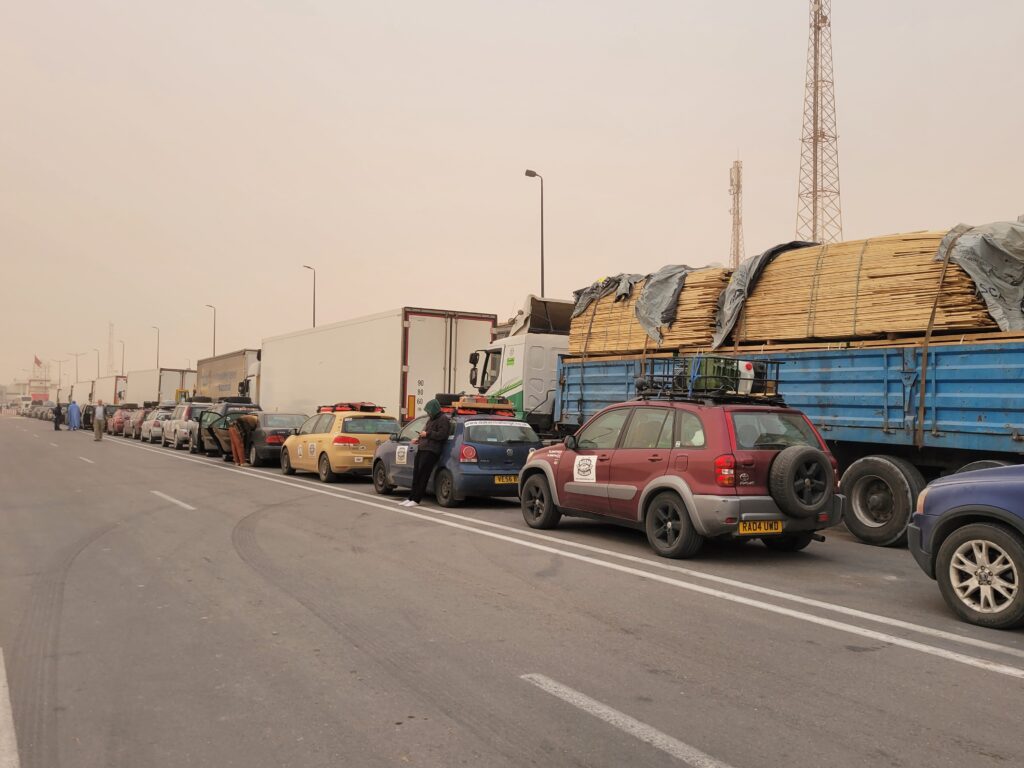
All teams will meet up at the Hotel Barbas in Western Sahara in late January. From here, you’ll travel in groups through Mauritania and into Senegal. The night will be spent catching up with the rest of the competitors, sorting out any remaining fees, and making plans for the next few days. You head off early for the Mauritanian border – around six am. It’s an hour’s drive to the border, and resources are extremely limited, so bring plenty of water and food. It’s a long process.
It took us seven hours to get through – the quickest on record for the rally! Expect a lot of waiting, paperwork, and more waiting. Eventually, everyone is processed and you will be on your way. Attempting this crossing alone would be extremely difficult; travelling as a group with the help of your local fixers is an absolute must.
Desert or Road?
After clearing customs, teams split into two groups. One group heads off into the desert for a couple of nights camping, while the other group sticks to the road and travels to Nouadhibou or Nouakchott, the capital of Mauritania. Nouadhibou is the only real option, as it can be reached in about an hour’s drive, whereas Nouakchott is roughly a six-hour drive. We travelled to Nouadhibou, and it turned out it was just us! The road is terrible in places, but there’s only one road, so you can’t get lost. There are plenty of checkpoints – just follow instructions, smile and wave, have your Fiche forms ready, and you’ll be fine.
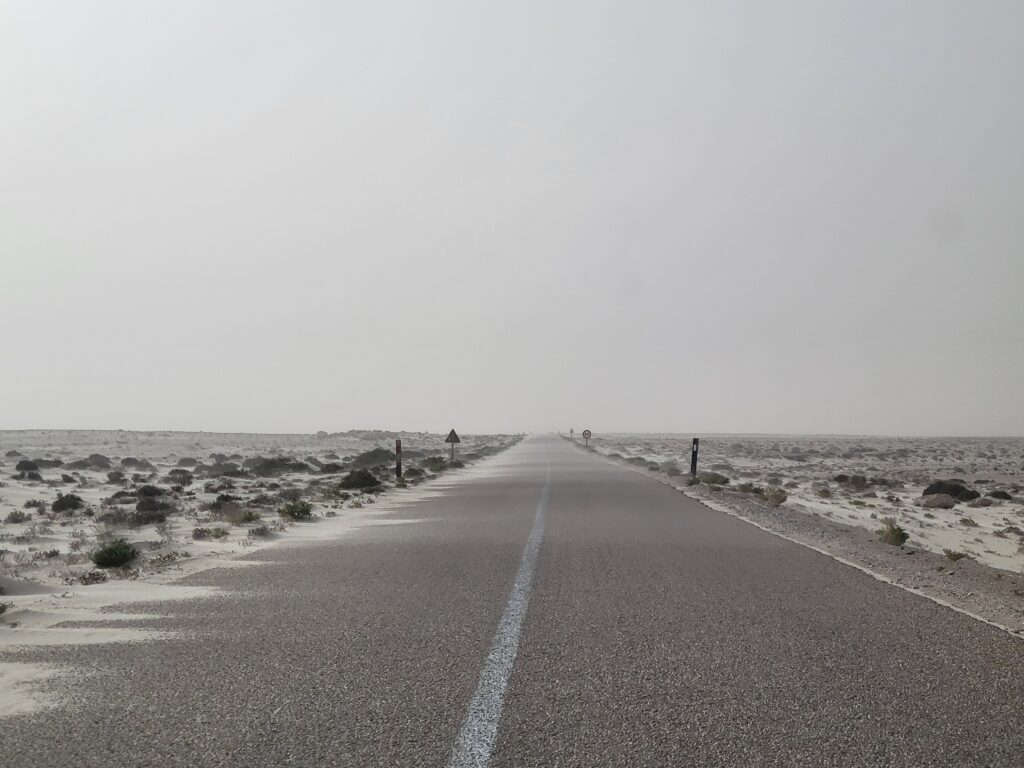
We found a great guesthouse to stay in Nouadhibou – Nouadhibou Guesthouse. After a long, dusty day, it was great to have a shower and relax. The following day, we headed off to the capital.
Nouadhibou to Nouakchott is a long drive, so it’s best to fill up your jerry can, and get whatever else you need, as resources are very limited along this stretch of the country. Once you reach Nouakchott, you’ll have a couple of nights to chill while you wait for the other teams to return from the desert. A rendezvous point and time will be confirmed, and all teams meet there to head to the Diama border crossing into Senegal – a bumpy and dusty five-hour ride. You then cross into Senegal as a group and continue to St Louis.
Check out our Mauritania travel guide for essential tips and useful information before your trip
Heading to Senegal
It is your responsibility to ensure you have a visa for Senegal, if you require one. These are no longer issued at the border and must be obtained in advance. Travelling on Australian passports, we required a visa. It’s best to get it before you leave home. If your country doesn’t have a Senegalese Embassy, there is one in Morocco.
Plan for a long day – around ten hours from leaving Nouakchott to reaching St Louis.
The teams then spend a couple of days relaxing near St Louis, before setting off for the final drive to the finish line, Banjul, The Gambia. If time allows, you can explore more of Senegal. We spent three weeks driving around the country before entering The Gambia. There’s loads to see and do.
Be sure to check out our travel guides for Senegal and The Gambia for tips and inspiration to help plan your adventure
The Gambia
The Gambia is a welcoming country. We entered at the Farafenni border crossing without any dramas and went inland to the Gambia River National Park. We stayed a few nights at the Kairoh Guesthouse, right on the river – a great experience.
We then made the six hour drive down the river towards the coast and Banjul, where we met the local fixer and handed over the keys to the car.
If you are travelling with the main group convoy, there will be a finish line party and dinner. This is usually in the first few days of February. If you’ve taken more time exploring, no problem, you just call the local contact when you arrive and are ready to donate your car. The car will then be auctioned off, with funds going to local causes. It is possible to visit these charities to see how previous funds have supported the community.
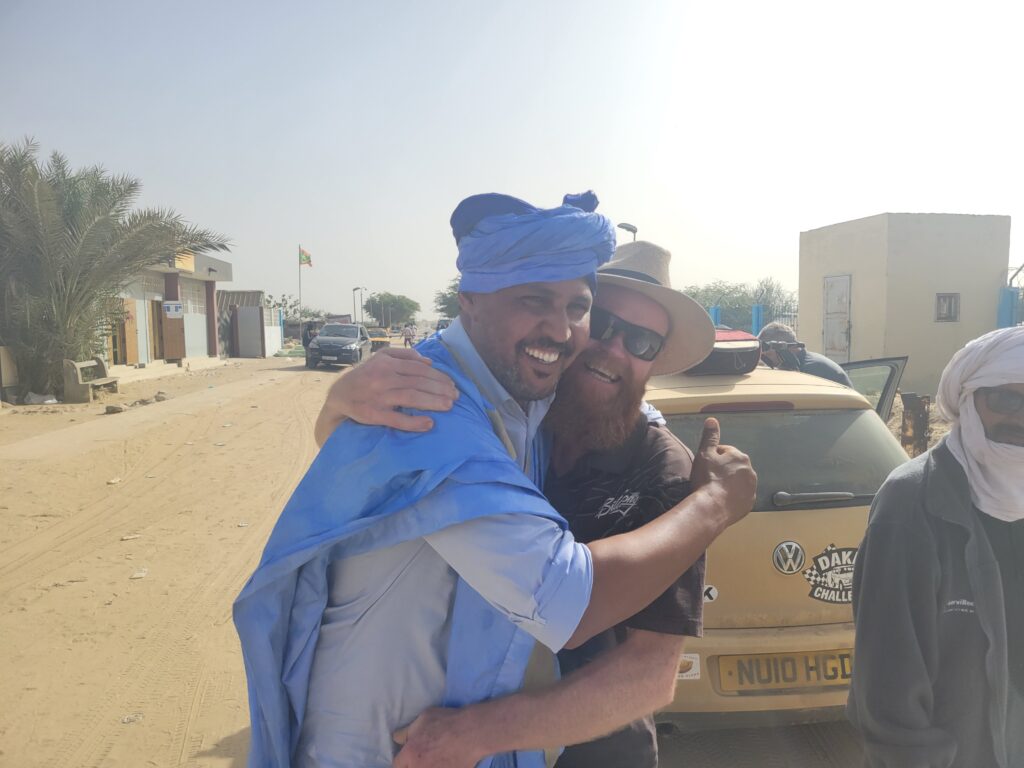
The rally has assigned fixers at each border crossing – without them, it would be a nightmare. They meet the group at or before the border, have all the paperwork sorted, show you where to go and what to do, and assist with any issues. They speak the local language, are familiar with how things work, and are a wealth of knowledge for any questions you may have about their country.
We crossed into Morocco on our own, as we left a month before the main group, and entering Morocco is fairly straightforward. We then crossed into Mauritania and Senegal with the other teams, as this wasn’t something we wanted to attempt solo. We spent three weeks exploring Senegal, and crossed into The Gambia on our own, which was relatively easy. Don’t attempt to exit Senegal alone unless you have some experience with foreign borders.
From Start to Finish – Conquering the Dakar Challenge
After nine weeks and five thousand five hundred kilometres, there was a mix of feelings upon completing the challenge. Accomplishment, satisfaction, excitement – DAM STRAIGHT. But there’s also a twinge of sadness as you say goodbye to the trusty car that’s carried you all the way.
Still, all good things must come to an end, and for your four-wheeled friend, it’s just the beginning of a new life in The Gambia. This is where the challenge ends, and teams begin to head home. With new friends, wild stories, and countless memories, it’s not an adventure you’ll forget any time soon.
Are we glad we did it? NO DOUBT. Would we recommend giving this ultimate overland adventure through West Africa a go? MOST DEFINITELY! In the end – it’s the journey, not just the destination – that defines the Dakar Challenge.