
Curious about a country where history, mystery, and untouched nature collide? Want to see some colossal monuments that leave a lasting impression? This Belarus travel guide (updated 2026) covers everything you need to know, from how to get there to what makes it worth visiting. Our adventure took us through Minsk and Brest, offering a deeper look at what travel here is really like. We share our insights on where to stay, where to eat and drink, and things to see and do. Our travel style is independent and immersive, with a focus on practical tips and useful things to know before visiting this obscure destination.
Some links may be affiliate, meaning we earn a small commission at no extra cost to you – this helps us keep sharing honest travel inspiration.
Belarus, ‘white Russia’. This would no doubt be appropriate in the depths of winter, when snow blankets the country; however, ‘land of huge statues’ might be a better description. Ruled by the authoritarian Alexander Lukashenko since 1994, both he and the country attract plenty of controversy. The landlocked Eastern Europe nation, long shrouded in mystery, previously had travel restrictions, with little publicity or information available for visitors. But recently, like other formerly closed-off destinations, Belarus has made entry visa-free and straightforward, allowing curious travellers to experience what the country has to offer. With unique and amazing sites, great public transport, and inviting locals, Belarus is a great choice for those seeking a genuine and interesting adventure.
Why go to Belarus?
Belarus is unusual, and unlike most other places. With overcrowding on the rise in popular destinations, people are seeking out more authentic experiences in the unknown and forgotten corners of the world. Belarus is one such place. Here, you will share the streets with locals instead of crowds of foreigners and often have attractions to yourself. With one of Europe’s oldest National Parks, home to the bison, and an amazing array of ancient and modern architecture, there’s a great variety of things to see and do. Castles, parks, and giant statues add to the allure, making Belarus a rewarding and unforgettable country.
Quick facts for travelling in Belarus
- Capital: Minsk
- Best time to visit: May to September
- Budget (mid-range couple): AU$150 per day
- Currency: Belarusian Ruble (BYN)
- Language: Russian
- Visa requirements: Yes (on arrival)
- Travel difficulty: 3 (1 = basic & 5 = challenging)
For even more unusual destinations in Eastern Europe, you may also want to look into Transnistria, a self-declared republic with a very different feel from its neighbours
Minsk
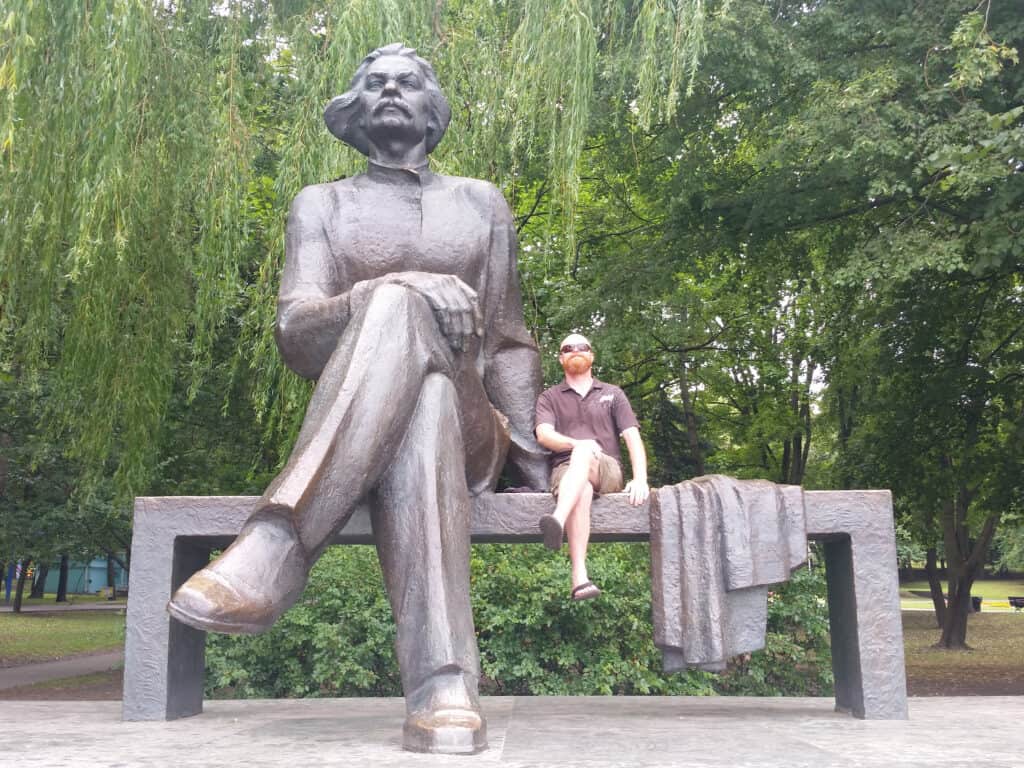
A European capital like no other, Minsk is an enjoyable city to explore. A feast for the senses, it may be a little overwhelming at first, and you may not know which way to look. As one of the oldest cities in Europe, there’s certainly plenty to see. The streets are clean and tidy, while parks packed with trees are never away. Statues and monuments tower over their surroundings, keeping a watchful eye on passing pedestrians. It’s a pleasant place.
Getting to Minsk
Arriving by plane into Minsk or one of the country’s other international airports is the only way most visitors are permitted to enter Belarus. The airport is about an hour’s bus ride from the city centre. Bus number 300 makes the journey regularly, stopping at Central Train Station. From there, trains run to various towns and cities, including Brest. The Minsk Metro also stops at Central Station, making it easy to access points of interest throughout the city.
Where to stay in Minsk
Minsk has a surprising number of hotels and accommodation options, often at very competitive prices. Staying around the city centre is your best bet, as this is where you’ll find most of the eating and drinking establishments. Many of the city’s attractions can be reached on foot from here, with the metro allowing you to get to those that are a bit out of the way. We found a great Airbnb just off the main street, with everything we needed within easy reach.
Where to eat and drink in Minsk
The city is full of local-style restaurants, serving traditional dishes, with potato and mushrooms always popular. International-style restaurants are harder to find, as are familiar supermarket brands from home, with many products coming from neighbouring Russia. A great place to find seasonal fruit, vegetables, and homemade products is Komarovka Market. Nightlife is plentiful, with bars and clubs easy to find.
- Get to TNT Rock Club (we enjoyed the cool tunes and drinks)
- Don’t miss Kuhmistr (great place to try Belarusian dishes, vegetarian friendly and some staff speak English)
- Check out Cherdak (in the old town, with a rooftop terrace and decent cocktails)
Things to see and do in Minsk
The Museum of the Great Patriotic War is a must visit. Modern, with clear explanations in English. Guides are available but rarely speak English.
Immerse yourself in daily life by visiting Komarovka Market – grab some produce and chat with the locals while you’re there.
Wander Nezavisimosti Avenue and check out the KGB Headquarters, Red Church, Government House and many other historical buildings.
Minsk City Tour Bus is the best way to see some of the city’s architectural wonders like the National Library, Bolshoi Opera House, Minsk Arena, and City Hall. Tours are available in many different languages. The bus departs just across from Central Train Station.
Take a stroll through one of the many parks, adorned with giant statues of national figures. If you’re lucky, you may even spot a squirrel.
Visit the Botanical Gardens, one of the oldest in Europe.
Mir Castle is an easy day trip, with regular buses leaving from Central Bus Station. Impressive and recently restored, with immaculate gardens, it’s a great place for a picnic.
Getting around Minsk
The Minsk Metro is fast, regular, and modern, and is the best way to reach out of the way places. With broad streets, wide walkways, and fascinating sights along the way, walking is the most memorable way to explore the city centre. As usual, taxis are abundant, but you’ll need to speak some Russian to get around easily.
The country has a one of a kind feel about it.
Brest
Brest, in the south-west near the border with Poland, has a distinctly European feel about it. People are a little more laid back here, and you’ll see things that you wouldn’t normally see in Minsk. Chestnut trees line the streets, which are decorated with lamps and wrought-iron furniture. One of Belarus’s most visited places, popular with both locals and travellers, it can get busy. Home to the mighty Brest Fortress and the UNESCO World Heritage site Belavezhskaya Pushca National Park, Brest is a worthwhile place to spend a few days.
Getting to Brest
The easiest way to reach Brest is via express train from Minsk. Comfortable, modern, and fast, the journey takes just over three hours. Buses also make the trip. Demand is high on weekends, so it’s best to book ahead.
Where to stay in Brest
The city offers a wide range of accommodation types, catering to all budgets. Staying near Sovetskaya Street allows you to walk to points of interest, with the train station also just a short walk from the centre. We found an Airbnb in a traditional-style apartment just off the plaza, which was an ideal spot.
Where to eat and drink in Brest
Brest sees plenty of visitors, so it’s no surprise that there are loads of eating and drinking establishments. Most bars serve pub type meals, while restaurants catering to most diets can be found without too much fuss.
- Get to Coyote Bar (live music, crazy on weekends)
- Don’t miss Jules Verne (cool restaurant where we enjoyed a delicious curry)
- Check out Draft House (good selection of beer and wine)
Things to see and do in Brest
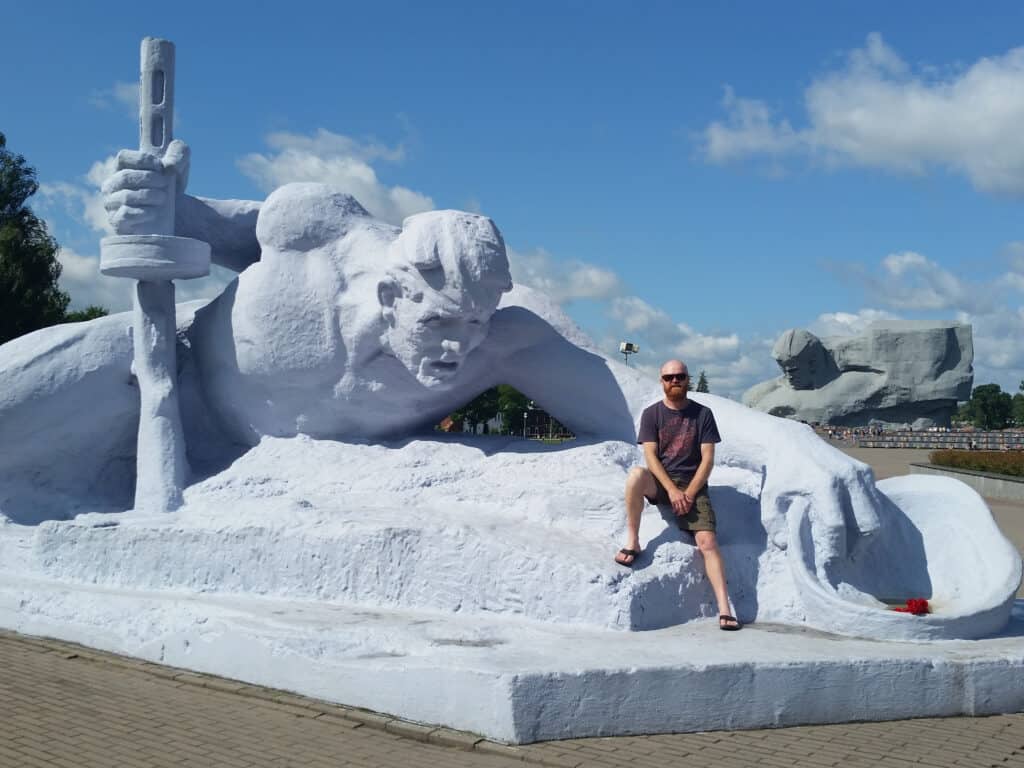
Brest Fortress is a powerful place. A memorial to Soviet troops, the Courage Monument is epic! Dotted with museums and points of interest, the grounds serve as poignant reminder of the mass loss of life and suffering caused by war.
Belavezhskaya Pushca National Park is a UNESCO site and Europe’s oldest wildlife refuge. Large enclosures house Bison and Przewalski’s horses, with ongoing efforts to repopulate wild populations. A road runs through the park, allowing you to self- drive or take a tour on a park bus. Walking trails are plentiful and well-marked. We brought a picnic and walked to a lake. Bring your own supplies, as only drinks and snacks are available at the park entrance.
We caught the bus from Brest Bus Station to the park; the ride taking around an hour. The attendants at the bus station are very helpful and will ensure you catch the correct bus.
The Lamplighter lights the streetlamps along Sovetskaya Street every evening around sunset. A large clock displays the time and indicates when he will begin. Brest is one of only three places in the world where a lamplighter still performs this task daily, dressed in an old-fashioned uniform and lighting the gas lamps by hand, keeping the tradition alive.
Artwork made from wrought iron can be found throughout the city’s parks and streets. Crafted by local blacksmiths, each piece is unique. Wandering around finding them is fun.
Getting around Brest
Brest is easy and pleasant to explore on foot. The Central Bus Station provides connections to more remote destinations, such as Belavezhskaya Pushca National Park, while trains depart regularly for Minsk.

Getting to Belarus
All travellers wanting to visit Belarus must enter by air, with Minsk National Airport serving as the main point of entry. The airport is modern and well-organised, with connections to Europe, the Middle East, and Asia, making it relatively straightforward to get here.
There are direct flights to Belarus from both Georgia and Armenia, making it an easy addition to your Caucasus travel itinerary
Useful things to know before visiting Belarus
English speaking locals are rare.
Signage is almost exclusively in Russian.
With limited import partners, you won’t find a lot of familiar brand names.
The country is very clean and tidy.
You’ll find a small Information Centre at Central Train Station in Minsk.
Brest also has a very helpful Tourist Information Centre.
Visas on arrival are straightforward.
Most locals avoid political subjects.
Wi-Fi is readily available.
The public transport system is excellent.
The zone around the Chernobyl site is off limits, as are other border areas.
Final thoughts on travelling in Belarus
Belarus is one of the most interesting countries in Europe. Predominantly in the news for political reasons, it would be a mistake to judge the country solely by its government or the media coverage. Belarus has a lot to offer. It’s history, nature, and architecture are unique and unusual. The country has a one of a kind feel about it. It’s different, which makes it both intriguing and exciting. Despite being surrounded by contrasting neighbours on all sides, Belarus has managed to keep its own identity. Its people all have a story to tell. Life here has been complicated, like in many other countries. The younger generation have new ideas, change is unavoidable. Belarus will evolve, but it’s landscapes, architecture, and people will still be here.