
Ever heard of Moldova but not quite sure what to expect? Discover timeless charm, scenic countryside and warm hospitality. This Moldova travel guide (updated 2026) covers everything you need to know, from how to get there to what makes it worth visiting. Our adventure took us through Chisinau and Cahul, along with plenty of scenic day trips, offering a deeper look at what travel here is really like. We share our insights on where to stay, where to eat and drink, and things to see and do. Our travel style is independent and immersive, with a focus on practical tips and useful things to know before visiting this obscure destination.
Some links may be affiliate, meaning we earn a small commission at no extra cost to you – this helps us keep sharing honest travel inspiration.
Moldova, ‘a place to find yourself’. You might need to start by locating it on a world map, as many people have never even heard of the country, let alone know where it is! One of Europe’s smallest and least visited nations, Moldova is usually overlooked. With limited information and little international exposure, Moldova has largely gone under the travel radar so far. But things are about to change. With mainstream destinations in Europe becoming overcrowded, more travellers are seeking somewhere new and different. If you enjoy history, fortresses, unique cultures, and wine, then Moldova is the place to discover!
Why go to Moldova?
Why visit Moldova? Simply, because the country deserves more attention. After visiting, you’ll wonder why it isn’t at the top of everyone’s travel list. The capital, Chisinau, is full of attractions, along with a growing number of cafes and bars. Both the north and south of the country are easily accessible, with ancient castles, fortresses, and caves giving it a medieval feel. As one of the top twenty wine producers in the world, finding a local winery is never a problem. Known for their hospitality, interaction with locals is warm and rewarding. With some of the fastest Wi-Fi in Europe, excellent tourist facilities, and a growing number of flight connections, travel to Moldova is undoubtably about to boom. The allure of visiting an unknown destination won’t last forever – people will soon know where Moldova is. Discover Moldova now.
Quick facts for travelling in Moldova
- Capital: Chisinau
- Best time to visit: April to October
- Budget (mid-range couple): AU$120 per day
- Currency: Moldovan Leu (MDL)
- Language: Romanian
- Visa requirements: No
- Travel difficulty: 1 (1 = basic & 5 = challenging)

Chisinau
Chisinau is a city on the way up, with a growing number of quality cafes, bars, and restaurants emerging on the city scene. Young Moldovans are returning from their lives abroad with a new enthusiasm, entrepreneurs are opening new businesses, and there’s an air of excitement around the city. Large parks full of trees and lakes, wide streets watched over by statues honoring Moldavans of high esteem, along with a unique mix of ancient buildings make exploring the city both fascinating and enjoyable. Chisinau is a very tidy, colourful, and well-maintained city. It’s stylish and calm. With a helpful tourist information centre, and locals who are genuinely pleased to see you, Chisinau is a place you will love and look forward to returning to.
Getting to Chisinau
With an increasing number of flight connections to Europe and the Middle East, reaching Chisinau is relatively straightforward. The airport is served by a cheap and regular bus to the city centre, along with taxis and rideshare options. It’s also possible to arrive by train, bus, or car from neighbouring Romania.
Where to stay in Chisinau
Chisinau is a relatively small city, with an excellent bus network, so there are plenty of nice areas to stay. The city centre is home to big hotels, which are very convenient. You won’t find a lot of guesthouses, but the city has plenty of Airbnb’s, which are a popular investment for younger Moldovans returning home. We stayed in a lovely one across the street from Valea Morilor Park. Getting a place near one of the city’s many parks is easy and gives you the chance to enjoy walks, a popular local pastime. Rose Valley Park, at the other end of town, is another good choice – the city centre is easily reachable on foot, and connections to the airport are excellent.
Where to eat and drink in Chisinau
Chisinau’s food scene is varied and affordable, offering a wide range of cafes, bars, and restaurants. Choosing where to eat will often be your only challenge – there are so many options that you could easily spend weeks exploring them. Plenty of supermarkets make self-catering easy, with Nr1 being the best supermarket chain in Moldova.
- Get to Marleen Cocktail Bar (a trendy spot with the best cocktail I’ve ever had, try the Totoro)
- Don’t miss Tucano Coffee (good coffee, vegan treats, smoothies, plus cool tunes and free Wi-Fi)
- Check out Asian Street (popular place with some of the best food around)
- Worth a visit is Bio Organic Raw Café (a bit pricier, but worth it) and La Placinte (has a few restaurants around the city serving local Moldovan cuisine)
Things to see and do in Chisinau
National Museum of Ethnography and Natural History Don’t miss this place! Two floors of interesting and informative displays. There’s a mammoth skeleton downstairs.
Moldova State University Museum Home to an amazing collection of exhibits. Ring the doorbell and the curator will let you in. He’s a real gentleman and is the founder of the Museum. It’s free.
Stephen the Great Monument is one of the three hundred monuments that adorn the city. Walking the streets searching for your favourite is a great way to get a feel for the city.
Historical buildings are on display throughout Chisinau. Architectural masterpieces, many made with limestone, are well preserved, and provide an insight into the various cultures that have called Chisinau home over the centuries. The old water tower is a very unusual building, and worth the effort to find.
Relax in one of the city’s many parks We enjoyed Valea Morilor Park, which is a short walk from the centre and the perfect place for a picnic in the forest. Cathedral Park is another top spot for a break, with cafes, benches, free Wi-Fi, and occasional summer markets.
Central Market is the heart of local shopping, with everything from local produce such as cheese and honey, to clothes and electrical goods. Cash only.
Day Trips The city makes a great base for exploring the surrounding region, with plenty of rewarding options nearby. Hiring a car is inexpensive, and driving conditions are generally of European standard – traffic is manageable, road signs are clear, and other drivers are polite. Alternatively, you can hire a driver for the day or join one of the many excursions offered by local tour companies.
Warm and friendly people, a unique and traditional culture, along with spectacular landscapes and architecture, make Moldova a rewarding destination.

DAY TRIPS from Chisinau
Soroca Fortress is in the North of the country, in the town of the same name. Getting here is an easy two-hour drive from Chisinau. The fortress dates back to the 15th century and has been restored. The nearby Nr1 Supermarket has a well-stocked deli and is the perfect spot to grab some lunch for a picnic in the park surrounding the fortress.
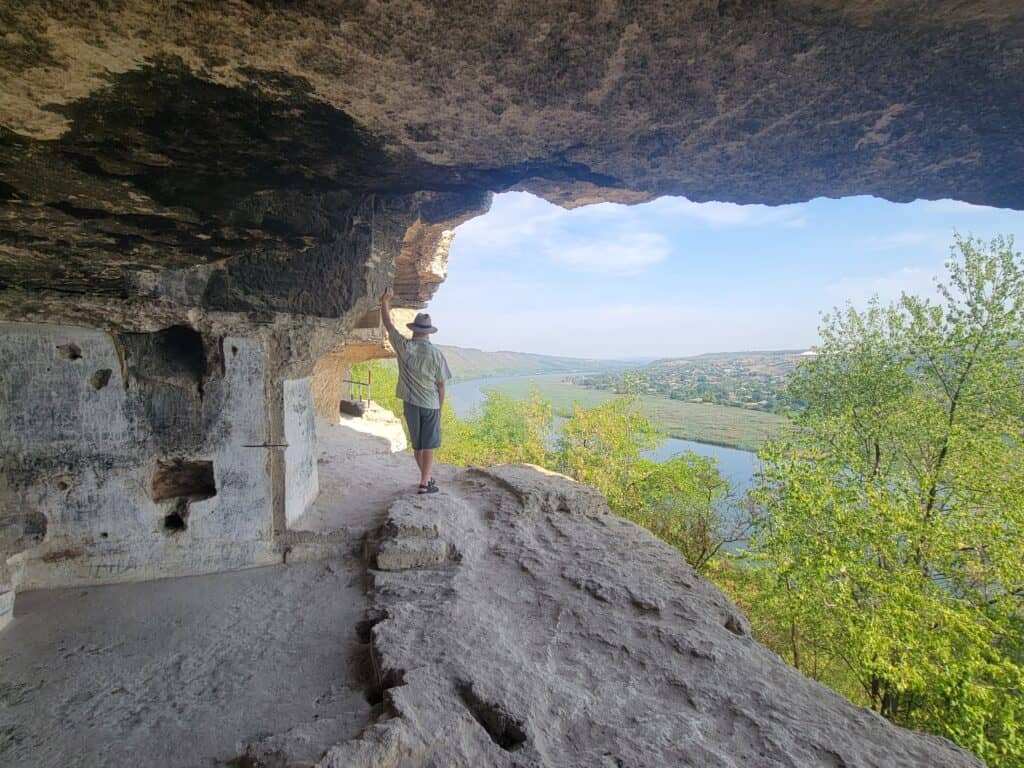
Tipova Monstery is carved into the side of a cliff and was originally a fort. The picturesque location, overlooking the river and surrounding countryside, is worth the drive alone. You can climb and explore nearly all of the old cave dwellings.
Old Orhei is another ancient cave area, dating back thousands of years. The whole area is a natural reserve, and you could easily spend a day here checking out all the old dwellings, cave monastery and museum.
- Don’t miss Eco Resort Butuceni (located below the bell tower, with a restaurant serving delicious local food and wine)
Curchi Monastery was our favourite monastery, and Moldova has no shortage of them. It’s close to Chisinau, and is popular for wedding photos with locals. There were six wedding parties the day we stopped there!
Manuc Bey Palace and Hunting Castle make an easy half day trip. The palace is now a museum.
Cricova Winery is one of the world’s largest underground wineries, with over seventy kilometres of roads, and thirty million litres of wine! You must pre-book, with tours in English limited to once or twice per week.
Transnistria is a country that officially doesn’t exist. It is one of the most interesting and unusual places that we have visited. You will need your passport to cross the border. They have their own currency, government, police and military. It is home to the impressive Bender Fortress. Buses head here from Chisinau twice a day, and although day trips are great, spending a few days here is highly recommended.
Check out our guide for useful things to know before visiting Transnistria
Getting around Chisinau
Chisinau has a cheap and extensive bus network, which is regular and reliable, with routes all over the city. You can prepurchase a local travel card, swipe your own bankcard, or pay cash when you get on. Taxis, as in most busy areas, are everywhere. We found that the best way to get around the city was on foot. The footpaths are wide, and most of the streets have plenty of established trees offering shade.

Cahul
Situated in the south of the country, Cahul makes a perfect base for exploring the region. It’s more of a town than a city, with a relaxed, easy-going vibe. You won’t find any jaw dropping sights around town, but there’s some cool stuff to see, and the locals are friendly. With wineries and a nearby Biosphere Reserve, Cahul is a favourite escape for people from Chisinau.
Getting to Cahul
Less than a three-hour drive from Chisinau, reaching Cahul is straightforward. You can also take the bus, which takes close to four hours. The Romanian border is just a twenty-minute drive away, making entry or exit via Romania a convenient option.
Where to stay in Cahul
There isn’t a huge range of accommodation options, but you shouldn’t have any trouble finding a local hotel, guesthouse, or Airbnb if you book in advance. Most places are scattered around the town centre, which is the most convenient area to stay. Farm stays outside of town are also an option, provided you have your own car.
Where to eat and drink in Cahul
With tourism still in its infancy, Cahul doesn’t offer a wide range of five-star restaurants. However, there are some good local spots, along with several decent supermarkets and delis.
- Get to Fourchette (the best supermarket in town, with a deli offering a range of tasty local dishes)
- Don’t miss Central Market (a great place for fresh fruit and vegetables, with the best selection on Saturdays)
- Check out Basilika Cafeteria (good coffee, a nice selection of teas, and beautiful cakes)
Things to see and do in Cahul
Lower Prut Biosphere Reserve Located south of Cahul, the Lower Prut Biosphere Reserve covers a large area of rivers, lakes, and wetlands. With its diverse ecosystems, it’s an incredible destination for birdwatching and nature lovers. Infrastructure is gradually improving, with new access roads and observation towers continuing to develop. A UNESCO-listed biosphere reserve, it’s well worth the drive.
Eco Village Valeni This traditional-style village includes accommodation, a restaurant, and a small museum. It offers a glimpse into rural life in Moldova, both past and present. It’s a community-focused initiative and a rewarding place to visit.
Wine Tasting at one of the local vineyards will be on most itineraries. Vinia Traian Vineyard does not always offer tours in English, but you can taste and purchase their wines. Staff are helpful, and while language barriers may exist, the experience is still enjoyable.
Getting around Cahul
Cahul city centre can easily be explored on foot. Anywhere outside of the city requires a car. Plenty of taxis line the streets and can take you wherever you want to go. Prices are negotiable.
Getting to Moldova
Chisinau has a growing number of connections to Europe, with direct flights to several destinations across the region, including parts of the Caucasus such as Armenia and Georgia. Arriving by car, bus, or train from neighbouring Romania is straightforward, and travel via Transnistria is also possible. Land borders with Ukraine may be subject to restrictions depending on current conditions.
Useful things to know before visiting Moldova
Moldova is a safe, friendly and welcoming destination.
Young people speak English.
Tourism infrastructure is great, with three information centres, English signs, and helpful locals.
ATMs and currency exchanges are everywhere. Card payments are accepted in most places except local markets.
We use Wise Multi-Currency Card when we travel – get yours here and support our adventures.
Some Nr1 Supermarkets have a currency exchange inside.
They have a good recycling program.
The roads and driving conditions are generally excellent.
The airport has all the usual modern conveniences, with the customs staff being some of the friendliest we’ve experienced.
Mobile coverage and eSIM is excellent.
Locally made organic products, such as cosmetics, tea, and honey are easy to find.
Shopping centres usually have free toilets.
Chisinau’s bus network is inexpensive and easy to use.
Final thoughts on travelling in Moldova
Moldova is a country that will leave you wondering, wondering where all the travellers are, and why Moldova is one of Europe’s least visited countries. Warm and friendly people, a unique and traditional culture, along with spectacular landscapes and architecture, make Moldova a rewarding destination. Yet we felt like we were the only visitors, on many occasions during our time in the country, which is rare these days. The fact that the country has seen only the curious visit in the past is an attraction in itself, but this luxury won’t last forever. With other parts of Europe experiencing problematic visitor numbers, you get the feeling that Moldovans should feel grateful that they have been forgotten thus far. But you can sense the change. Moldovans are ready, the country is ready. Discover this authentic gem, the time is now. Moldova truly has loads to offer.
For lovers of road trips, wine, culture, and hidden gems — explore our guides to Georgia, Armenia, and Azerbaijan